Skip to content
October 29, 2026

Old Story

  • Home
  • Old Story Life
Main Menu

Old Story Life

I was barely conscious, trying to nurse my crying twins through the agonizing pain of a t:orn ut:erus, when my adult stepdaughter stormed in and dumped a cup of scalding coffee over my lap.

May 25, 2026 - by Old Story Life - Leave a Comment

The coffee hit my lap like burning acid while one twin screamed against my chest and the other searched weakly at my hospital gown. For one split second, the entire …

I was barely conscious, trying to nurse my crying twins through the agonizing pain of a t:orn ut:erus, when my adult stepdaughter stormed in and dumped a cup of scalding coffee over my lap. Read More


The 22 year old woman was forced by her stepmother to get into bed with one of her business partners, and she fled in desperation to a stranger’s car… but that moment of fate would change her life forever

May 25, 2026 - by Old Story Life - Leave a Comment

The inside of the car carried the scent of polished leather, cedarwood, costly cologne, and a sterile kind of cleanliness that felt almost unreal after the nightmare Elena had just …

The 22 year old woman was forced by her stepmother to get into bed with one of her business partners, and she fled in desperation to a stranger’s car… but that moment of fate would change her life forever Read More

I arrived early at my stepson’s house to drop off a generous check for his new baby. Through the cracked window, I heard him tell his wife, “Just pretend to care until she signs the trust over on Friday, then we’ll throw the old bat into a cheap nursing home.”

May 25, 2026 - by Old Story Life - Leave a Comment

I arrived ahead of schedule at my stepson’s home carrying a generous check for his newborn baby. Standing outside the slightly open kitchen window, I heard him tell his wife, …

I arrived early at my stepson’s house to drop off a generous check for his new baby. Through the cracked window, I heard him tell his wife, “Just pretend to care until she signs the trust over on Friday, then we’ll throw the old bat into a cheap nursing home.” Read More

The $60,000 I saved for my son’s first home disappeared from his future the moment I found his in-laws partying inside my mountain cabin.…

May 25, 2026 - by Old Story Life - Leave a Comment

I drove to my mountain cabin to get it ready for rental, expecting an empty house and a simple meeting with the realtor. Instead, I walked in and found my …

The $60,000 I saved for my son’s first home disappeared from his future the moment I found his in-laws partying inside my mountain cabin.… Read More

My sister secretly moved her in-laws into the dream house I spent years working to buy, then told everyone it belonged to her.

May 25, 2026 - by Old Story Life - Leave a Comment

I returned home from a three-day business trip to Dallas and found an unfamiliar minivan parked in my driveway, folding lawn chairs sitting on my porch, and a pair of …

My sister secretly moved her in-laws into the dream house I spent years working to buy, then told everyone it belonged to her. Read More

After giving birth, my husband told me to take the bus home while he went to hotpot with his family. Two hours later, he called trembling: “Claire… everything is gone.”

May 25, 2026 - by Old Story Life - Leave a Comment

Chapter 1: The Taste of Broth and Betrayal The neonatal nurse, her eyes crinkling behind a blue surgical mask, gently lowered my newborn son into my waiting arms. It was …

After giving birth, my husband told me to take the bus home while he went to hotpot with his family. Two hours later, he called trembling: “Claire… everything is gone.” Read More

Everyone Ignored Me… Until The Navy SEAL Commander Said, “We’ve Been Waiting For You.”

May 25, 2026 - by Old Story Life - Leave a Comment

My Family Laughed When I Sat Alone At My Brother’s Trident Ceremony—Until The SEAL Commander Stopped, Saluted Me, And Said, “Ma’am, We’ve Been Waiting.” My mother told the security guard …

Everyone Ignored Me… Until The Navy SEAL Commander Said, “We’ve Been Waiting For You.” Read More
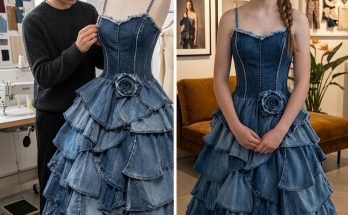
My stepmom laughed at the prom dress my little brother made for me out of our late mom’s jeans. By the end of the night, everyone knew exactly who she was. I am 17. My brother, Noah, is 15. Our mom died when I was 12. Dad remarried Carla two years later. Then Dad died last year from a heart attack, and the whole house changed overnight. Prom came up a month ago. She took over the bills, the accounts, the mail, everything. Mom had left money for Noah and me. Dad always said it was for “important things.” School. College. Big milestones. Apparently, Carla decided her definition of “important” was different. Prom came up a month ago. She was in the kitchen scrolling on her phone when I said, “Prom is in three weeks. I need a dress.” “Prom dresses are a ridiculous waste of money.” “Mom left money for things like this.” “No one wants to see you prancing around in some overpriced princess costume.” That made her laugh. Not a real one. One of those little cruel ones. Then she finally looked at me and said, “That money keeps this house running now. And honestly? No one wants to see you prancing around in some overpriced princess costume.” “So there’s money for that.” “Watch your tone.” “You’re using our money.” I went upstairs and cried into my pillow. Carla stood up so fast her chair scraped. “I am keeping this family afloat. You have no idea what things cost.” “Then why did Dad say the money was ours?” Her voice went flat. “Because your father was bad with money and bad with boundaries.” I went upstairs and cried into my pillow like I was 12 again. I heard Noah lurking outside my door, apparently too scared to say anything. “And you can make a dress?” Two nights later, Noah came into my room carrying a stack of old jeans. Mom’s jeans. Noah set them on my bed and said, “Do you trust me?” “With this?” I looked at the jeans. Then at him. “What are you talking about?” “I took sewing last year, remember?” “And you can make a dress?” We worked when Carla went out or locked herself in her room. Noah met my eyes. “I can try.” He panicked instantly. “I mean, if you hate the idea, that’s fine. I just thought—” I grabbed his wrist. “No. I love the idea.” We worked when Carla went out or locked herself in her room. Noah dragged Mom’s old sewing machine out from the laundry closet and set it up on the kitchen table. I said, “Bossy.” The next morning, Carla saw it hanging on my door. It felt like Mom was in the room with us. In the fabric. In the way Noah handled it so carefully. The dress was fitted through the waist and flowed at the bottom in panels of different blues. He had used seams and pockets and faded pieces in ways I never would have imagined. It looked intentional. Sharp. Real. I touched one panel and whispered, “You made this.” I went to bed incredibly proud of myself that night. *** The next morning, Carla saw it hanging on my door. She stopped. Then she walked closer. “Please tell me you are not serious.” Then she burst out laughing. “What is that?” I stepped into the hallway. “My prom dress.” She laughed harder. “That patchwork mess?” Noah came out of his room immediately. Carla looked between us and said, “Please tell me you are not serious.” Noah’s face went red. I said, “I’m wearing it.” She put a hand over her chest like I had wounded her. “If you wear that, the whole school will laugh at you.” Noah went stiff beside me. I said, “It’s fine.” “No, actually, it’s not fine.” Carla waved at the dress. “It looks pathetic.” Noah’s face went red. “I made it.” She looked delighted that I had spoken back. Carla turned to him. “You made it?” He lifted his chin. “Yeah.” She smiled the way people do when they want to hurt you slowly. “That explains a lot.” I took one step forward. “Enough.” Carla looked delighted that I had spoken back. “Oh, this should be fun. You’re going to show up to prom in a dress made out of old jeans like some kind of charity project, and you think people are going to clap?” Noah helped zip the back. His hands were shaking. I said, very quietly, “I’d rather wear something made with love than something bought by stealing from kids.” The hallway went dead silent. Carla’s eyes changed. Then she said, “Get out of my sight before I really say what I think.” I wore the dress anyway. Noah helped zip the back. His hands were shaking. I said, “Hey.” She said she wanted to “see the disaster in person.” “What?” “If one person laughs, I am haunting them.” That made him smile. “Good.” She said she wanted to “see the disaster in person.” I overheard her on the phone telling someone, “You have to come early. I need witnesses for this.” The weird thing was, people didn’t laugh. When prom night finally arrived, I saw her near the back with her phone already out. Tessa muttered, “Your stepmom is evil.” The weird thing was, people didn’t laugh. They stared, but not in a bad way. One girl from the choir said, “Wait, your dress is denim?” Another said, “Did you buy that somewhere?” Then his eyes moved past us and landed on Carla. A teacher touched her chest and said, “This is beautiful.” I was still braced for impact, though. I did not believe the room yet. Carla was watching me too hard. Like she was waiting for the exact second it would all collapse. Then, during the student showcase part of the night, the principal stepped up to the microphone. He did the usual speech. Thanking the staff. Telling us to be safe. Announcing awards. Then his eyes moved past us and landed on Carla. She actually smiled at first. His expression changed. He lowered the mic a little and said, “Can someone zoom the camera toward the back row? Toward that woman there?” The cameraman adjusted. The big projection screen lit up with Carla’s face. She actually smiled at first. She thought she was about to be part of some cute parent moment. Then the principal said, slowly, “I know you.” The room quieted. I felt every hair on my arms stand up. Carla laughed nervously. “I’m sorry?” He stepped off the stage and walked closer, still holding the mic. “You’re Carla.” She straightened. “Yes. And I think this is inappropriate.” He ignored that. He looked at me. Then, at Noah, who had come with Tessa’s mom and was standing near the wall. Then back at Carla. “I knew their mother,” he said. “Very well.” “This is not your business.” I felt every hair on my arms stand up. He kept going. “She volunteered here. She raised money here. She talked constantly about her kids. She also spoke, many times, about the money she put aside for their milestones. She wanted them protected.” Carla’s face drained. She said, “This is not your business.” The principal’s voice stayed calm. “It became my business when I heard one of my students almost skipped prom because she was told there was no money for a dress.” “You cannot accuse me of anything.” A murmur rolled through the room. He turned slightly and pointed toward me. “Then I heard her younger brother made one by hand from their late mother’s clothing.” Now people were fully staring. Carla said, “You’re taking gossip and turning it into theater.” He said, “No. I’m saying that mocking a child over a dress made from her mother’s jeans would already be cruel. Doing it while controlling money that was meant for those children is worse.” Carla turned around so fast I thought she might fall. She snapped, “You cannot accuse me of anything.” A man near the side aisle stepped forward. I recognized him vaguely from Dad’s funeral, but it took me a second. He said, “Actually, I can clarify a few things.” Carla turned around so fast I thought she might fall. He had contacted the school because he was concerned. He introduced himself into the spare mic one of the teachers handed him. He was the attorney who had handled Mom’s estate paperwork. He said he had been trying for months to get responses about the children’s trust and had received nothing but delays. He had contacted the school because he was concerned. People started whispering harder. Carla hissed, “This is harassment.” The attorney said, “No, this is documentation.” My legs were shaking. Then the principal did something I will never forget. He looked at me and said, “Would you come up here?” My legs were shaking. Tessa squeezed my hand and shoved me gently forward. I walked up to the stage. The whole room blurred. The principal smiled at me, soft this time. “Tell everyone who made your dress.” I swallowed. “My brother.” Nobody laughed. He nodded. “Noah, come here too.” Noah looked like he wanted the floor to swallow him, but he came. The principal held out a hand toward the dress. “This is talent. This is care. This is love.” Nobody laughed. They clapped. Not polite clapping. Real clapping. Loud. Fast. Then she made one last mistake. Noah froze. An art teacher near the front called out, “Young man, you have a gift.” Someone else shouted, “That dress is incredible.” I looked into the crowd and saw Carla still holding up her phone. Except now it was useless. She wasn’t recording my humiliation. She was standing in the middle of her own. Then she made one last mistake. I don’t remember leaving the stage. She yelled, “Everything in that house belongs to me, anyway.” The room went dead. The attorney spoke before anyone else could. “No. It does not.” Carla looked around like she was finally realizing there was nowhere to hide. I don’t remember leaving the stage. I remember Noah beside me. I remember crying. I remember people touching my arm and saying kind things. I remember Carla disappearing before the final dance. Then, for the first time in a year, he didn’t go quiet. Eventually, prom came to an end, and I went home exhausted. When we got home, she was waiting in the kitchen. “You think you won?” she snapped the second we walked in. “You made me look like a monster.” I said, “You did that yourself.” She pointed at Noah. “And you. Little sneaky freak with your sewing project.” Noah flinched. Then, for the first time in a year, he didn’t go quiet. She opened her mouth, but he talked over her. He stepped in front of me and said, “Don’t call me that.” She laughed. “Or what?” His voice shook, but he kept going. “Or nothing. That’s the point. You always do this because you think nobody will stop you.” She opened her mouth, but he talked over her. “You mocked everything. You mocked Mom. You mocked Dad. You mocked me for sewing. You mocked her for wanting one normal night. You take and take and then act offended when anyone notices.” A knock hit the front door before she could answer. I had never heard him talk like that. Carla looked at me. “Are you going to let him speak to me this way?” I said, “Yes.” A knock hit the front door before she could answer. It was the attorney. And Tessa’s mom. They had come straight from school. The attorney said, “Given tonight’s statements and prior concerns, these children will not be left alone without support while the court reviews the guardianship and the funds.” Three weeks later, Noah and I moved in with my aunt. Carla just stared at him. Tessa’s mom walked past her like she was furniture and said to us, “Go pack a bag.” So we did. Three weeks later, Noah and I moved in with my aunt. Two months later, control of the money was taken away from Carla. She fought it. She lost. The dress is hanging in my closet now. Noah got invited to a summer design program after one of the teachers sent photos of the dress to a local arts director. He acted annoyed about it for a full day before I caught him smiling at the acceptance email. The dress is hanging in my closet now. I still touch the seams sometimes. Carla wanted everyone to laugh when they saw what I was wearing. Instead, it was the first time people really saw us.

My stepmom refused to buy me a prom dress—so my brother made one from our late mom’s old jeans, and everyone was stunned.

May 25, 2026 - by Old Story Life - Leave a Comment

My stepmom laughed at the prom dress my little brother made for me out of our late mom’s jeans. By the end of the night, everyone knew exactly who she …

My stepmom refused to buy me a prom dress—so my brother made one from our late mom’s old jeans, and everyone was stunned. Read More
The house still smelled like funeral lilies when Alistair Finch came back through the front door. Not fresh lilies. Not the white, graceful kind people place beside a coffin and pretend means peace. These were three-day-old lilies, sweet and rotting in the warm living room, mixed with cold coffee, blood, lemon oil, and the sharp dust that rose from old oak when a body hit it too hard. Linda Morse lay on the floor her father had built with his own hands. Her brother Damian had one knee pressed into her side. A quitclaim deed lay wrinkled beside her face. And Saraphina, Damian’s wife, stood near the sideboard with her phone half-lowered, finally understanding that witnesses changed everything. “Get away from her,” Mr. Finch said. His voice was not loud. It did not need to be. Before Arthur Morse died, the house on Washington Avenue had been the kind of place people remembered by smell. Pipe tobacco in the winter, though Arthur had quit smoking fifteen years earlier. Lemon oil on the staircase. Coffee at 5:30 every morning. Tomato sauce on Sundays when he believed grief, illness, money trouble, and bad news could all be softened by feeding people until they stopped arguing. Linda remembered her father sanding the living room floor when she was eight. He had let her sit cross-legged in the corner with safety goggles too big for her face while he worked the boards smooth. “Home is not what you own,” he told her, tapping one dusty finger against the wood. “Home is who refuses to leave you bleeding inside it.” At eight, Linda thought that sounded dramatic. At thirty-three, with her cheek against that same oak and blood in her mouth, she understood every word. Arthur had raised two children in that house after his wife died. Linda grew disciplined young. She made coffee before school, learned how to fold hospital corners on beds, and sat beside her father on hard nights when he stared too long at old photographs. Damian handled grief differently. He learned charm. He learned how to make adults laugh, how to ask for money like it was a temporary misunderstanding, how to break things and leave other people holding the broom. Arthur loved them both. That was the painful part. He gave Damian second chances until second chances became a lifestyle. He paid one credit card. Then another. Then a business loan Damian swore would change everything. It changed nothing. By the time Arthur got sick, Damian had already begun speaking about the house with the tone of a man measuring curtains in someone else’s bedroom. Linda heard it on video calls from overseas. “You won’t want that place,” Damian said once, smiling into the camera. “Too many memories. Too much upkeep.” Linda was in uniform, standing under fluorescent light in a military hallway that smelled like bleach and old coffee. “It’s Dad’s house,” she said. Damian’s smile thinned. “For now.” After the funeral, grief came with aluminum foil. Neighbors brought casseroles in glass dishes with masking tape labels. Mrs. Alvarez from across the street brought enchiladas wrapped in two layers of foil, because she said Arthur had always pretended not to like spicy food while taking thirds. The kitchen counters disappeared under food. The dining room table held condolence cards, sympathy flowers, and the white cloth Linda’s mother had embroidered before cancer made her hands too weak to finish the last corner. Damian and Saraphina moved through the house like buyers at a private showing. Saraphina touched the mantel and checked her phone. Damian opened drawers. Linda noticed, but she said nothing at first. Military discipline teaches you that not every threat deserves an immediate answer. Some threats deserve documentation. Mr. Finch arrived at four o’clock with his old leather briefcase and careful eyes. He had been Arthur’s lawyer for forty years. He had seen Linda with braces, Damian with a black eye from a fight he claimed he did not start, Arthur with hospital bracelets hidden under his sleeve. He opened the will at the dining room table. His voice trembled once at Arthur’s name. Then it steadied. The house belonged to Linda. Damian would receive half of the appraised value, paid within five years. Fair. Clear. Legal. Linda closed her eyes for one second. Not because she had won. Because her father had known. He had known she needed time. He had known Damian would push. He had known the house needed protection from the son who loved money most when it had someone else’s name on it. Damian stopped drumming his fingers. Saraphina’s phone came up just enough to photograph the final page. Linda saw it. So did Mr. Finch. He did not confront her then. That was the first thing Damian never understood about quiet men. Quiet was not weakness. Sometimes quiet was a witness taking notes. Mr. Finch left just after five. On the porch, he touched Linda’s shoulder. “Your father wanted you safe here,” he said. “Remember that.” Linda watched him walk down the steps. His coat hung crooked over one shoulder. His briefcase looked heavier than it should have. Then she went back inside. The living room had changed. Damian was standing near their father’s chair with a new stack of papers. Saraphina stood behind him, black silk blouse smooth, gold hoops catching the hallway light. “Sign these,” Damian said. Linda looked down. Quitclaim deed. Waiver of inheritance rights. Private sale agreement. Her name was misspelled once in the body of the document, but the signature line had been circled in red. Something inside her went very still. “No,” she said. Damian’s face flickered. For half a second, he looked almost hurt. Then he chose rage because rage was easier than shame. He hit her. The first punch did not feel like pain right away. It felt like sound. A hard crack through her skull, through the room, through every childhood memory hanging on the walls. The second punch brought the pain. She hit the floor. Her coffee mug shattered behind her, spilling a dark stain across the oak. Damian dropped his knee into her ribs. Something gave. Hot. Bright. Wrong. “Sign it,” he snarled, shoving a pen toward her face. “Sign it or die here.” Saraphina watched. That was the detail Linda would remember later. Not the fist. Not the paper. Saraphina’s stillness. Her sister-in-law did not panic. She did not cry. She did not say Damian’s name like a woman surprised by violence. She watched like someone waiting for a transaction to finish. Then she said, “Finish it, Damian. Put her down.” Linda’s fingers scraped the floorboards. She thought about breaking his wrist. About driving her thumb into his eye. About every ugly technique training had buried in her body for emergencies exactly like this. But she could not breathe cleanly. And she would not sign. The pen rolled under the sofa. Then the front door opened. Mr. Finch stood in the doorway with his coat still buttoned. Mrs. Alvarez stood behind him, one hand over her mouth, the foil pan of enchiladas tilted in her other arm. For one strange second, Linda noticed sauce leaking from the corner of the foil. Red sauce. Blood-red against Mrs. Alvarez’s white sleeve. Mr. Finch lifted his phone. It was recording. Damian froze, still kneeling on Linda. “Get away from her,” Mr. Finch said. Damian tried to laugh. It came out wrong. “Alistair, this is family business.” Mr. Finch stepped into the living room. The old floor creaked under his shoes. “I said get away from her.” Saraphina whispered, “Damian… stop.” Not because she cared about Linda. Because the room now had eyes. Damian’s grip loosened just enough for Linda’s fingers to curl around the edge of the quitclaim deed. Mr. Finch looked at the paper. Then at Linda’s face. Then at Damian’s raised fist. And then he said the sentence that made Damian’s whole body go still. “Your father recorded a statement two weeks before he died explaining exactly what you would try to do.” No one moved. Even Mrs. Alvarez stopped crying. Damian’s mouth opened, but nothing useful came out. Mr. Finch kept the phone steady. “He said if you attempted to coerce Linda into signing away the house, your five-year payout would be suspended pending civil review. He also gave me permission to release the recording to law enforcement.” Saraphina’s phone slipped fully from her hand. It hit the floor with a small, expensive crack. Damian looked at the lawyer. Then at Linda. Then at the papers. The house seemed to hold its breath. “Dad wouldn’t do that,” he said. Mr. Finch’s face changed then. Not anger. Grief. “He did not want to,” he said. “You made him afraid he had to.” That landed harder than a shout. Damian stood slowly, both hands raised as if innocence could be performed after impact. Linda rolled onto her side and coughed. Pain tore through her ribs. Mrs. Alvarez set the enchiladas on the entry table and called 911 with shaking hands. Saraphina bent to grab her phone. Mr. Finch looked at her. “Leave it,” he said. She did. The police arrived in seven minutes. Linda remembered the number because soldiers count time when fear tries to blur it. Seven minutes for sirens. Nine minutes for paramedics. Twelve minutes before Damian stopped saying “misunderstanding.” An officer photographed the quitclaim deed, the broken mug, the blood on the floor, the red circle around Linda’s signature line, and the bruise already forming beneath her eye. Saraphina tried to say she had been upstairs. Mrs. Alvarez made one sound. A bitter little laugh. Then she pointed to the phone on the floor and said, “She was standing right there.” Mr. Finch provided his recording. Then he provided the other one. Arthur Morse’s final statement had been filmed in Mr. Finch’s office thirteen days before his death. In the video, Arthur looked smaller than Linda remembered. His skin had the waxy gray color sickness gives to strong men when it is tired of negotiating. But his voice was clear. “My son Damian has asked about selling Washington Avenue six times in the past month,” Arthur said on the recording. “He has pressured me while I was medicated. He has suggested Linda is too unstable to inherit because of her military service. I reject that completely.” Linda watched the video later from a hospital bed with tape tugging at the inside of her elbow. Her ribs were cracked. Her cheekbone was bruised. Her lip was split. But when her father’s voice filled the room, she stopped feeling the pain for a few seconds. Arthur looked into the camera. “Linda kept this family standing when she was a child,” he said. “This house is hers. Not because she needs wood and walls. Because I trust her to know what a home is.” Mr. Finch, sitting beside the hospital bed, removed his glasses. Linda did not cry until then. One tear slipped sideways into her hair. She hated that. Then she let the next one come. Damian was charged with assault, attempted coercion, and fraud-related offenses tied to the forged property documents. Saraphina was not charged with assault, but the investigation did not leave her untouched. Her text messages became their own kind of confession. Don’t let her walk away with it. Make her sign tonight. Once it’s filed, she’ll never unwind it. Those messages destroyed the clean little story she tried to tell police. She filed for separation three weeks later, not because she was innocent, but because consequences make cowards practical. Damian blamed Linda. Then Mr. Finch. Then their father. Never himself. At the first hearing, he appeared in a navy suit with a swollen face and expensive remorse. He looked toward Linda only once. “You ruined my life,” he said under his breath. Linda looked at him for a long moment. “No,” she said. “You finally ran out of people to hand it to.” The judge issued a protective order. The probate court suspended Damian’s payout pending civil litigation. Arthur’s added clause, prepared after his recorded statement, allowed the estate to deduct legal fees, medical costs, property damage, and any losses caused by attempted fraud from Damian’s share. It did not erase him. Arthur had not been cruel. But it stopped rewarding him for being dangerous. That felt like her father’s final act of parenting. Not punishment. Boundary. The house stayed quiet after that. Too quiet at first. Linda slept downstairs because climbing the staircase hurt her ribs. Mrs. Alvarez came every morning with coffee and something wrapped in foil, even after Linda told her she did not need to. “People always say that when they need it most,” Mrs. Alvarez said. Mr. Finch handled the filings. The forged deed was void. The will stood. The appraisal was completed honestly, without Damian’s friend from the real estate office trying to cut the value in half for a fast sale. Linda could have sold the house later. Nobody would have blamed her. Too much had happened on those floors. But one afternoon, after the bruises turned yellow and breathing no longer felt like punishment, she found Arthur’s old toolbox in the garage. His carpenter’s pencil was still inside. So was a folded piece of sandpaper. Linda carried both into the living room and knelt carefully beside the stained board where her coffee mug had broken. The blood had been cleaned. The coffee stain remained faintly in the grain. She could have replaced the board. Instead, she sanded it by hand. Slowly. Carefully. Not to erase what happened. To make the surface livable again. Mrs. Alvarez watched from the doorway. “You sure you want to keep this place?” she asked. Linda ran her palm over the oak. She felt the old smoothness beneath the damage. “Yes,” she said. And for the first time since the funeral, the word did not hurt. Months later, Damian accepted a plea. He avoided the maximum sentence, but not prison. Not entirely. Not the record. Not the protective order. Not the loss of his claim against the estate after the deductions swallowed nearly everything he thought he was owed. Saraphina moved out of state. She sent one message through an attorney claiming she had been afraid of Damian too. Linda read it once. Then she deleted it. Fear did not make Saraphina say, “Put her down.” Choice did. Mr. Finch retired the following spring. At his small office party, Linda brought him a new leather briefcase. He protested the cost. She ignored him. “You came back,” she said. He looked down at the briefcase for a long time. “I forgot my reading glasses,” he said. Linda smiled faintly. “No,” she said. “You listened to the wrong feeling and trusted it.” That made his eyes shine. Decent people rarely think of themselves as brave. They think they were simply nearby when something needed doing. Sometimes that is exactly what bravery is. One year after Arthur Morse’s funeral, Linda hosted Sunday dinner at Washington Avenue. Not a big one. Mrs. Alvarez came with enchiladas. Mr. Finch came with store-bought pie and pretended not to be embarrassed by it. Two soldiers from Linda’s unit came early to help move the heavy dining table back into place. The white embroidered cloth went over it again. The last unfinished corner, the one Linda’s mother never completed, was still visible if you knew where to look. Linda left it that way. During dinner, sunlight crossed the living room floor and touched the repaired board near the sofa. No one mentioned Damian. No one mentioned the papers. No one mentioned the blood. The house did not forget. But it breathed differently now. After everyone left, Linda stood alone in the living room with the porch light glowing through the front windows. She picked up her father’s carpenter’s pencil from the mantel and held it in her palm. Then she set it beside a framed photo of Arthur in the yard, sleeves rolled up, laughing at something outside the frame. The oak floor was scarred. So was she. But the door was locked from the inside now. And nobody standing outside it had the power to make her sign herself away again.

Her brother thought he had won the house—until the lawyer played the phone recording.

May 25, 2026 - by Old Story Life - Leave a Comment

The house still smelled like funeral lilies when Alistair Finch came back through the front door. Not fresh lilies. Not the white, graceful kind people place beside a coffin and …

Her brother thought he had won the house—until the lawyer played the phone recording. Read More
“Activate Code Red.” Daniel did not ask me to repeat myself. That was why I trusted him. For six months, every contract for Emily’s wedding had carried the same emergency clause, the same private security contact, the same medical evacuation protocol, and my signature buried beneath the polite language of deposits, insurance, and cancellation penalties. My father froze with one hand still hovering near Lily’s face. My mother’s fingers loosened around my wrist. Emily made a short, ugly sound, halfway between a laugh and a gasp, as if money could not possibly be moving away from her while she was still wearing white. “Claire,” Ryan said quietly, “what does that mean?” Before I could answer, the resort manager stepped onto the deck with a tablet in one hand and a sealed cream folder in the other. He looked at Emily first. Then at my parents. Then down at Lily trembling in my arms. His face changed. Because the guests had seen a torn dress. He had seen an injured child. The island had been beautiful that morning. That was the part I hated later. The ocean was too blue. The white chairs were too perfect. The glass dance floor over the sand caught the sunlight like the whole world had agreed to sparkle for my sister. Two million dollars can buy a lot of beauty. It cannot buy decency. I had paid for everything quietly because Emily cried on my porch six months earlier and told me she wanted one day where our parents did not make her feel poor, small, or second-best. I knew what that felt like. In our family, love was distributed like inheritance. Emily received softness. I received expectations. Then, after my divorce, I received judgment. My parents called me “practical” when they needed money. They called me “bitter” when I said no. They called me “jealous” whenever Emily wanted something I had earned. So I paid. Not for them. For the sister I remembered before she learned how useful cruelty could be when our parents applauded it. Daniel, my operations director, handled the contracts. Every vendor, suite, private boat transfer, florist, chef, decorator, security badge, and emergency clause ran through my office. Emily thought Ryan’s family had paid. My parents thought Ryan’s family had paid. Ryan thought my parents had contributed more than they had. Nobody asked me. That was familiar too. People rarely ask the invisible woman who keeps the lights on where the money comes from. The first warning came at brunch. Lily reached for a strawberry from the fruit tower, and my mother moved the plate away. “Don’t touch the display,” she said. “It’s not a cafeteria.” Lily pulled her hand back into her lap. She was eight years old, wearing a yellow sundress she had picked herself because she said it looked like sunshine. Emily laughed from across the table. “Relax, Mom. She’s just excited. She’s probably never seen this much food arranged properly.” The bridesmaids laughed. My daughter looked down at her napkin. I should have stood up then. I should have packed our bags, called Daniel, and left that island while the sea was still calm and my daughter still believed accidents could be fixed with hugs. Instead, I swallowed the insult. I told myself it was Emily’s wedding week. I told myself Lily was strong. I told myself one more day of silence would keep the peace. That is the lie women are trained to call maturity. By the reception, the air smelled like salt, perfume, melted candle wax, and champagne. The guests drifted across the deck in linen and pearls. A string quartet played near the floral arch. Waiters carried trays of lobster bites and tiny gold spoons of caviar nobody needed but everyone photographed. My father held court near the bar. “My younger daughter married well,” he told a guest loudly enough for me to hear. “Ryan’s family knows how to do things properly.” My mother glanced at me. “Claire is more… independent.” She said independent the way other people say contagious. I found Lily near the railing with lemonade in both hands. “Are you okay?” I asked. She nodded too fast. “Grandma said I should stay out of pictures.” Something in my chest twisted. Before I could answer, Emily swept across the deck in her custom gown, the train sliding behind her like a white wave. “Lily, move,” Emily snapped. Lily stepped back immediately. Her sandal caught the lace. There was one tiny tearing sound. Then red wine spilled down the embroidery. The deck went silent. Emily looked at the stain. Then at my daughter. “You filthy little brat,” she screamed. I moved. Not fast enough. Emily shoved Lily in the chest with both hands. My daughter’s lemonade cup flew into the air. Her arms windmilled once. Then she went backward over the low wooden railing and dropped six feet onto the decorative rocks below. The sound of her landing cut through the music. No one screamed at first. That was what I remembered most. The silence. Then Lily cried. And I ran. My father reached her first. Not to help. Not to check her breathing. He bent over her like she had embarrassed him. “Get up,” he barked. “Stop pretending.” Then he struck her cheek with two fingers. Hard enough to turn her face. I will never forgive myself for the half-second I froze. Not because I did not love my daughter. Because some part of me still could not believe they would go that far in public. Then my body moved. I pushed past him and gathered Lily into my arms. Her face was wet. Her yellow dress was twisted beneath her. One shoe was gone. Her breath came in sharp little pulls that terrified me. “Mommy,” she whispered, “did I do something bad?” That sentence emptied me. My mother grabbed my wrist when I reached for my phone. Then she slapped me. “Stop trying to ruin her wedding because you’re jealous and pathetic.” The guests were watching now. Ryan was white as the tablecloths. Emily stood above us on the deck, clutching her stained dress, breathing hard like she was the injured one. That was when I called Daniel. He answered on the first ring. “Claire? Are you all right?” I pressed speaker. Every person close enough heard me say, “Activate Code Red.” The resort manager opened the cream folder. Emily’s voice sharpened. “Ryan,” she whispered, “tell them this is your family’s resort package.” Ryan did not move. The manager looked down at the first page. Then he read the name attached to every payment, every deposit, every cancellation clause, every guest suite, every private boat, every floral invoice, every chef’s retainer, and every security protocol. “Claire,” he said carefully. “All authorizations are under Ms. Claire’s account.” My mother went pale. My father lowered his hand. Emily stared at the folder as if paper had betrayed her. Daniel’s voice came through the speaker again, steady and clear. “Claire, security is moving now. Do you want the guests informed who actually owns the island reservation?” I looked at Emily’s stained dress. At my father’s hand. At my mother’s stunned face. At my daughter trembling against my chest. Then I said, “Yes. And I want medical evacuation now.” The manager did not hesitate. He turned to his staff. “Cancel the reception. Close the bars. Secure the docks. Medical team to the lower deck immediately.” The island changed in seconds. The music stopped. Security appeared from the edges of the reception like they had been sewn into the scenery all along. A medic knelt beside Lily and spoke gently to her, not to the adults shouting over her. Another placed a neck brace with careful hands. Emily finally found her voice. “You can’t cancel my wedding.” I looked up at her. “I already did.” The announcement went out ten minutes later. Not cruelly. Not dramatically. Professionally. The resort manager stood at the microphone while guests gathered beneath swaying white lanterns and sweating floral arrangements that cost more than some cars. “Ladies and gentlemen, due to a serious medical emergency and a violation of guest safety protocols, this event has been terminated by the contracting party. Transportation back to the mainland will be arranged in groups. Please follow staff instructions.” A murmur moved through the deck. Emily screamed, “That’s not true!” Daniel’s voice came from my phone. “It is true. The contracting party is Claire. The wedding package, island lockout, vendor contracts, alcohol permits, entertainment, and guest accommodations were funded by her office.” Someone gasped. One of the bridesmaids actually sat down. My father looked at me like I had stolen something from him. That was almost funny. My mother whispered, “You paid for this?” I did not answer her. Lily’s fingers were wrapped around mine. Her eyes kept fluttering, and every flutter mattered more than the shock of adults who had mistaken my silence for poverty. Ryan stepped away from Emily. She reached for him. “Ryan, don’t listen to this. She’s doing this to punish me.” Ryan looked at the lower deck where the medics were preparing Lily for transport. “You pushed a child,” he said. “She ruined my dress.” The words left her mouth before she understood what they were. Ryan’s face closed. Not angry. Finished. He removed his wedding ring and placed it on the table beside the untouched cake knife. “We’re done.” Emily stared at him. Then she looked at me. For the first time in our lives, she looked less like my sister than my parents’ reflection. The helicopter arrived twenty-two minutes after Code Red. I rode with Lily. The rotors flattened the flowers along the path and sent napkins skidding across the deck. My mother tried once to follow us, sobbing now because cameras were out and the story had changed. Security stopped her. My father shouted that he was Lily’s grandfather. The medic said, “Then you should have acted like it.” I heard that through the roar of the helicopter and carried it with me all the way to the hospital. Lily had a concussion, a fractured wrist, deep bruising along her ribs, and cuts from the rocks. No spinal injury. No internal bleeding. The doctor said those words, and my knees nearly failed. Daniel arrived at the hospital before midnight with fresh clothes, legal documents, and the kind of silence that lets a person fall apart without making it a performance. “Police report is filed,” he said. I nodded. “Security footage?” “Preserved.” “Witnesses?” “More than enough.” “And the contracts?” He hesitated. I looked at him. “Daniel.” “The cancellation clause protects you,” he said. “Most vendors will be paid for work completed. Emily and your parents have no authority over the funds. The resort is cooperating fully.” That was the first practical relief. Not emotional. Practical. The kind that keeps collapse from spreading. Then Daniel handed me one more thing. A tablet. On the screen was a paused video from the reception deck. Emily shoving Lily. My father striking her. My mother slapping me. All of it clear. All of it undeniable. I turned the screen off. I did not need to see it twice. The fallout did not come in one wave. It came in pieces. Ryan’s family issued a statement the next morning saying the marriage had not been legally finalized and would not proceed. Emily tried to claim she had “reacted instinctively” after Lily damaged her dress. Then the footage leaked from a guest’s phone. Not the resort footage. A guest’s. It showed everything. The shove. The fall. The silence afterward. My father hitting Lily’s face. My mother slapping me. The internet did what the internet does. It judged quickly, loudly, and with more accuracy than my family deserved. My parents called me eighty-three times in two days. I answered none of them. Then came the lawyers. Emily was charged with assault and child endangerment. My father faced charges for striking Lily after the fall. My mother was not charged with the slap at first, but the protective order named all three of them. They were banned from contacting Lily. Banned from coming near my home. Banned from using family pressure as a disguise for access. Emily’s bridal boutique sued her for unpaid damage fees after she tried to claim the dress had been ruined by “a child’s attack.” The resort sent an incident report so clean, detailed, and devastating that even my parents’ attorney stopped using the phrase misunderstanding. Two million dollars had bought them flowers, music, chefs, and an island. But it had also bought cameras from eight angles. Lily recovered slowly. Children are resilient, people kept saying. I learned to hate that sentence. Children are not rubber. They do not bounce. They absorb. For weeks, Lily asked whether Aunt Emily was still mad. She asked if Grandpa hit her because she cried too loudly. She asked if Grandma thought she ruined everything. Every question put another crack through me. So I put her in therapy. Then I put myself in therapy. Because a mother can protect a child from future harm while still grieving every moment she failed to leave sooner. One evening, Lily sat beside me on the couch with her wrist in a purple cast. “Mommy,” she said, “why did you pay for Aunt Emily if she’s mean?” I looked at her tiny fingers resting on the blanket. “Because I confused helping someone with loving them,” I said. “And those aren’t always the same thing.” She thought about that. Then she leaned against me. “Don’t help her again.” I kissed the top of her head. “I won’t.” Three months later, Emily took a plea. Not because she was sorry. Because the footage was too clear. My father did the same. He never apologized to Lily. Not once. His statement to the court described the incident as “a stressful family misunderstanding.” The judge watched the video before sentencing. Then he looked at my father and said, “The child was on the ground injured. You struck her.” My father had no answer. My mother cried through the entire hearing, but only when people were watching. Afterward, she caught me outside the courthouse. “Claire,” she said, reaching for my sleeve. “You have to understand. It was your sister’s wedding.” I stepped back. “No,” I said. “It was my daughter’s injury.” Her face crumpled. That might have worked on me once. Not anymore. I walked away before she could make her shame my responsibility. A year later, Lily and I went back to the ocean. Not the same island. A smaller beach. No glass dance floor. No string quartet. No guests in linen pretending money was morality. Just a quiet rental cottage, a cooler full of sandwiches, and Lily running carefully along wet sand with both shoes on. Her wrist had healed. The scar near her hairline had faded to a thin silver mark. She still disliked loud parties. So did I. At sunset, she brought me a shell shaped like a tiny white bowl. “For your office,” she said. “So you remember vacation.” I smiled. “What part?” She looked toward the water. “The part where nobody yelled.” That broke me softly. Not all pain arrives screaming. Some of it arrives in a child’s definition of peace. I kept the shell. It sits on my desk beside the final resort invoice stamped CLOSED. Emily is no longer in our lives. Neither are my parents. Ryan sent Lily a letter once, apologizing for not moving faster. I read it to her only after her therapist said it was okay. Lily listened, nodded, and asked if we could get ice cream. That was all the closure she needed from him. As for me, I stopped paying for people who only loved me when I made their lives easier. The ocean was turning gold when Lily slipped her hand into mine. This time, when she stepped near the edge of the water, no one told her she was too much. No one told her to move. No one made her small. And when she laughed, the sound carried across the sand like something finally returned to its rightful owner.

My sister humiliated my daughter at her lavish wedding—so I canceled every dollar I had contributed.

May 25, 2026 - by Old Story Life - Leave a Comment

“Activate Code Red.” Daniel did not ask me to repeat myself. That was why I trusted him. For six months, every contract for Emily’s wedding had carried the same emergency …

My sister humiliated my daughter at her lavish wedding—so I canceled every dollar I had contributed. Read More

Posts pagination

Previous 1 … 198 199 200 … 215 Next

Search

About This Site

This may be a good place to introduce yourself and your site or include some credits.

  • Popular
  • Comments
  • Tags

For twenty years, my mother made sure the homeless boy living behind our house never went hungry. After her funeral, he took both my hands in his and told me, “Before she d:ie:d, she BEGGED ME TO KEEP HER SECRET FROM YOU.”

October 21, 2026

My daughter-in-law threw my 45-year-old wedding plates in the trash—and by noon, a truck was coming to take them away.

October 29, 2026

I Let My Husband Fire the Woman Who Raised Our Daughters — Then I Opened Her Envelope

May 19, 2026May 19, 2026

Our Nanny Left Quietly After 15 Years… But the Blueprint She Left Behind Exposed My Husband

May 19, 2026May 19, 2026

“Since you love numbers so much, go handle the bill like always.” My mother smirked during my sister’s extravagant bridal dinner. They treated me like the family servant while spending millions I secretly controlled.

May 19, 2026

My 9-year-old daughter had to walk three miles through the winter cold while my brother’s sons rode comfortably in Grandpa’s heated SUV. When she asked to join them, he coldly replied, “Remember your place.” Seeing her shivering, I wrapped her in - For twenty years, my mother made sure the homeless boy living behind our house never went hungry. After her funeral, he took both my hands in his and told me, “Before she d:ie:d, she BEGGED ME TO KEEP HER SECRET FROM YOU.”

[…] […]

No tags created.

Recent Posts

  • My daughter-in-law threw my 45-year-old wedding plates in the trash—and by noon, a truck was coming to take them away.
  • I Was Supposed to Spend 28 Days Working on an Oil Rig in the Gulf. But When I Returned Home Two Weeks Early, What I Discovered at 10 P.M. Left Me Speechless.
  • I Spent Mother’s Day Dining Alone—Then I Heard My Son Giving the Restaurant Manager My Membership Number.
  • My parents stuffed my clothes into a pillowcase and dropped me off at Grandpa’s farm while they took my younger sister to Orlando.
  • I said to my mother-in-law that I had an early flight and went to bed. At midnight, I heard my door open. She went through my suitcase, zipped something into the inner pocket, then whispered: ‘It’s in her carry-on. Tip off airport security at six.’
Copyright © 2026 Old Story.
Powered by WordPress and HitMag.