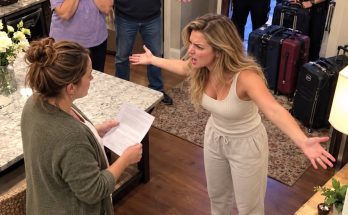
“We didn’t order anything for you,” my daughter-in-law said, then held out a chewed-over bone while expensive steaks and elaborate desserts sat in front of them. My son nodded along: “Anyway, Mom, you should go on a diet.” I just smiled and said, “I know.” When the waiter came back, I stood up — and what I announced left them speechless…
“We didn’t order anything for you,” my daughter-in-law said, then held out a chewed-over bone while expensive steaks and elaborate desserts sat in front of them. My son nodded along. “Anyway, Mom, you should probably be dieting.”
I just smiled and said, “Noted.”
When the waiter came back, I stood up—and what I said next left the whole table silent.
I have one son, Derek. He’s thirty-eight years old.
For most of his childhood, I raised him almost alone because my husband, James, worked double shifts as a plumber to keep us afloat. I worked nights at SF General so I could be home when Derek got off the school bus in the afternoon. I still remember the exact sound of his backpack hitting the kitchen floor. I remember microwaving pizza rolls and sitting across from him at our little table while he told me about his day, even when I’d already spent eight hours on my feet and my scrubs still smelled like disinfectant and the hospital.
In 2004, I sold my car—a 1999 Honda Civic. I got $3,200 for it. That money paid for Derek’s last semester at San Francisco State. He graduated debt-free. After that, I took the bus.
I still take the bus.
Last night, Derek invited me to dinner. He said it was a celebration. He didn’t say what we were celebrating. He just texted me the address and the time.
Bella Vista.
That new steakhouse on Geary Boulevard, the one with the Michelin star.
I looked it up online before I went. The menu didn’t list prices, which told me everything I needed to know. I wouldn’t have been able to afford a thing on it. But Derek had invited me, and Derek was my son.
So I put on the navy dress I wore to James’s funeral—the only truly nice thing I own—and I took the 38 Geary in the rain. I got there at 7:15, fifteen minutes late because the bus broke down on Masonic and I had to walk the rest of the way with my purse clutched against my chest.
When I stepped inside, damp and out of breath, the hostess looked at me like I’d tracked mud into a museum.
“Name?” she asked.
“Sullivan,” I said. “My son made a reservation.”
She checked her screen. Her nails were long and painted a deep burgundy.
“Oh, yes,” she said. “They’re already seated.”
They.
She led me through the restaurant. It smelled like truffle oil and money. The lights were low. Jazz drifted out of hidden speakers. Everyone looked polished and young and beautifully put together, dressed in clothes that probably cost more than my old mortgage payment used to.
Then I saw them.
Derek was sitting at a table in the corner beneath a crystal chandelier. He wore a charcoal-gray suit I’d never seen before, tailored close through the shoulders. His hair was slicked back. For a second he looked like a stranger wearing my son’s face.
Next to him sat Vivien, his wife. Thirty-five years old, blonde, beautiful in the expensive, finished kind of way you see in department-store ads. She had on a black dress with a slit up the side and diamond earrings that caught the light every time she moved her head.
Across from them sat my granddaughters, Emma and Olivia, twelve and nine, in matching pink dresses with their hair curled, both staring down at their phones.
There were four chairs at the table.
All of them were occupied.
I stood there holding my wet purse beneath that chandelier, blinking in the light, and Derek finally looked up.
“Oh,” he said. “Mom. You made it.”
Vivien didn’t look at me. She was cutting into a steak the size of a paperback novel. The knife made a soft squeaking sound against the porcelain.
“Sorry I’m late,” I said. “The bus—”
“It’s fine,” Derek said.
He glanced at Vivien, then back at me.
“We already ordered.”
I waited for him to say something else. To stand up. To wave over a server. To pull a chair from another table. To act like a son whose mother had just shown up in the rain for a dinner he had invited her to.
He didn’t.
“We didn’t order for you,” Vivien said.
She still didn’t look at me. She speared a piece of steak, dragged it through some dark sauce, and put it in her mouth. She chewed slowly, swallowed, then finally lifted her eyes to mine.
“You’re always saying you need to lose weight anyway.”
The room tilted.
I heard jazz.
I heard silverware clinking against plates.
I heard my own pulse beating in my ears.
Emma let out a little giggle. Olivia elbowed her, but she was smiling too. Derek said nothing.
I don’t know how long I stood there.
Ten seconds.
Ten years.
Then Vivien picked up a bone from her plate. She had already stripped most of the meat from it. There were bite marks near the edge. She held it out toward me as casually as if she were passing bread.
“Here,” she said. “If you’re hungry.”
She wasn’t joking.
Her face was perfectly blank. She just held the bone in the air between us and waited.
I looked at Derek.
My son.
The boy I used to carry on my back when he got sleepy.
The boy who cried when I left for work and made me promise I’d wake him up when I got home, even if it was three in the morning.
The boy I sold my car for.
He looked down at his plate.
A waiter appeared beside me, young, maybe twenty-five, with the kind of polished smile restaurants like that train into people.
“Ma’am, can I get you a chair?”
“No,” Vivien said before I could answer. “She’s not staying.”
The waiter’s smile faltered. He looked at me.
I should have left.
I know that now.
I should have turned around, walked out, taken the bus home, and never spoken to any of them again.
But I didn’t.
I reached out and took the bone from Vivien’s hand. I set it carefully on the edge of the table.
Then I smiled.
“Noted,” I said.
Vivien blinked.
Derek finally looked up.
“I’ll be right back,” I said.
I walked to the restroom. My legs were shaking. I locked myself in a stall, sat down on the closed toilet lid, and stared at the tile floor. Someone had dropped an earring. A tiny silver hoop lay in the corner near the baseboard.
I thought about James.
I thought about the night he proposed in this same neighborhood, years before any of these fancy places existed, at a little taqueria that’s gone now. He was twenty-five and I was twenty-three. He got down on one knee in front of everybody, and the owner gave us free horchata because he was so delighted by the whole thing.
I thought about the night Derek was born. Eighteen hours of labor. James held my hand the whole time. When they laid Derek on my chest, James cried. He looked at our son and said, “We made that. We made him.”
I thought about 2004, the year I sold the Civic. Derek needed $6,000 for his last semester. We didn’t have it. James picked up extra shifts, but it still wasn’t enough. So I sold the car. I never told Derek. I just told him we’d figured it out.
He graduated on a Sunday in a blue gown. He threw his cap in the air. I took the bus home and made his favorite dinner—spaghetti carbonara from my mother’s recipe. He ate three plates.
He never asked where the car had gone.
I washed my hands. I looked at myself in the mirror. Navy dress. Gray roots. A face worn thin by years of holding things together.
When I walked back to the table, Derek was already eating dessert. Some kind of chocolate construction with gold leaf on top. Eighty dollars, according to the menu I’d looked up online.
Vivien was on her phone. The girls were whispering to each other.
I stood beside the table and opened my purse.
“Actually,” I said, “I need to take care of something.”
The waiter appeared again.
“Ma’am?”
I pulled out my credit card—the one I got in 1997. Capital One. A card I barely use anymore.
“I need you to help me cancel this card,” I said.
I handed it to him.
“Right now. Call the number on the back and tell them I’m reporting the supplementary card as lost.”
He looked confused.
“Ma’am, I can’t really—”
“It’s my card,” I said. “I’m asking you to help me call. Please.”
Derek’s fork clattered onto his plate.
“Mom,” he said. “What are you doing?”
I looked at him.
“This is card number 4521,” I said. “The one you use. The supplementary card in your wallet.”
His face went white.
Vivien’s head snapped up from her phone.
“It has a $12,000 monthly limit,” I continued. “I’ve been paying the bill for three years. Since right after you got married.”
“Mom—”
“The card you used to pay for this dinner,” I said.
I gestured at the table. The steaks. The bone. The gold leaf. The wine bottle in the silver bucket of ice.
“This dinner costs $847.50. I checked the menu.”
Vivien stood up so fast her chair scraped the floor.
“You’re insane.”
“Maybe,” I said.
Then I turned back to the waiter.
“Can you call the number or not?”
He hesitated.
Then he nodded.
“I’ll be right back.”
He walked away with my card.
Derek stood up.
“Mom, you can’t do this.”
“Why not?”
He looked at Vivien. She was staring at me like I’d pulled a knife.
“Because we need that card.”
“For what?”
“For everything.”
His voice cracked on the word.
“For rent? For the girls’ school? For eight-hundred-dollar dinners where your wife hands me a bone across the table?”
Vivien grabbed her purse.
“Let’s go.”
“No,” Derek said.
Then he looked at me.
Really looked at me.
And for one second I saw my son again. The real one. The boy who used to hold my hand crossing the street.
“Mom,” he said quietly, “please don’t do this.”
“You wouldn’t do this,” Vivien said.
She stepped closer. Her perfume smelled like flowers and bleach.
“You’re bluffing.”
I looked at her. Then at Derek. Then at my granddaughters, both of them watching with wide, frightened eyes.
The waiter came back and handed me my card.
“It’s done, ma’am,” he said. “The supplementary account has been closed.”
“Thank you,” I said.
I slid the card back into my purse. Then I looked at Derek one more time.
“Happy celebration,” I said.
And I walked out.
I stood on the sidewalk in the rain waiting for the bus, and somewhere between the first passing headlights and the hiss of the tires on wet pavement, I realized I was smiling.
They showed up at my door at 9:30 the next morning.
I was in the kitchen making oatmeal when I heard the pounding. Not knocking. Pounding. The kind that rattles the hinges.
I knew it was Derek before I opened the door.
He was standing on my porch in a wrinkled T-shirt and jeans, unshaven, eyes red. Vivien stood behind him in athleisure that probably cost more than my monthly grocery bill.
Her face was tight with anger.
“We need to talk,” Derek said.
I pulled my bathrobe tighter around me.
“It’s 9:30 in the morning.”
“I don’t care what time it is.”
He pushed past me into the house. Vivien followed. She looked around my living room the way a real-estate photographer might, taking inventory. The floral couch from 1994. The carpet stain near the TV. The framed photo of Derek’s college graduation on the mantel.
“You can’t just cancel the card, Mom,” Derek said.
He was pacing in front of the window now.
“Do you have any idea what you did?”
I shut the front door.
“I canceled a credit card that’s in my name and that you’ve been using for three years.”
“I know. Our rent didn’t go through.”
His voice rose.
“The payment bounced. The landlord called yesterday. We’re late. Do you understand what that means?”
I walked into the kitchen and turned off the stove. The oatmeal had started to burn. The smell hung in the room.
“How much is your rent?” I asked.
Derek followed me.
“What?”
“Your rent. How much?”
He hesitated.
“Four thousand a month.”
I turned around slowly.
“Four thousand dollars.”
“It’s Knob Hill, Mom.”
“You’re paying four thousand dollars a month in rent,” I said, “and you needed my card to cover it.”
Vivien appeared in the doorway.
“That’s none of your business.”
“It becomes exactly my business if I’m paying for it.”
“You weren’t paying for it,” she snapped. “We were going to pay you back.”
“When?”
Silence.
Derek rubbed his face.
“Mom, please just reactivate the card. We’ll figure it out.”
“Figure what out?”
“Everything.”
He looked at me then, and I saw something I hadn’t seen in years.
Fear.
“I lost my job,” he said.
The room went cold.
“What?”
“Two months ago. They downsized the department. I’ve been looking, but…”
He swallowed hard.
“Nobody’s hiring right now.”
“Two months,” I repeated. “You lost your job two months ago, and you didn’t tell me?”
“I didn’t want you to worry.”
“So you kept spending money you didn’t have.”
Vivien stepped forward.
“We have an opportunity. A real one. An investment that could solve everything.”
I looked at her.
“What kind of investment?”
“A franchise,” Derek said quickly. “A smoothie place. It’s a guaranteed return. We just need fifteen thousand for startup costs.”
Fifteen thousand dollars.
I thought about my savings account—the one James and I built over thirty years. Mostly Treasury bonds. Sixty-eight thousand dollars, all told. James always said, This is for emergencies. This is for when we’re old and need help.
“I don’t have fifteen thousand dollars,” I said.
“Yes, you do,” Vivien said.
I looked at Derek.
He wouldn’t meet my eyes.
“Derek told me about the bonds,” she said.
My son had told his wife about my savings.
“Mom, it’s a loan,” Derek said. “We’ll pay you back with interest. I swear.”
“When?”
“Six months. Maybe a year.”
“No,” I said.
Vivien’s face hardened.
“Excuse me?”
“I said no.”
“You’re really going to let your son lose his apartment?”
Her voice had gone cold as glass.
“Your granddaughters?”
“You’re really asking me for fifteen thousand dollars two days after you handed me a chewed bone in a restaurant?”
Vivien gave a sharp little laugh.
“Oh my God. You’re still on that? It was a joke.”
“It didn’t feel like one.”
“Maybe if you had a sense of humor,” she said.
“Viv,” Derek said quietly.
She ignored him. She took one more step toward me. Again that perfume—flowers with something harsh underneath.
“You know what your problem is, Margaret?” she said. “You’re controlling. You’ve controlled Derek his whole life. You can’t let him grow up. You can’t let him be a man.”
“I sold my car so he could graduate college,” I said.
“And you’ve held it over his head ever since.”
“I never—”
“You’re doing it right now.”
She gestured around my kitchen, my little house, my whole life.
“You live in this sad little museum to your dead husband, and you expect Derek to feel guilty for having a life.”
Derek put a hand on her arm.
“Viv, stop.”
“Why should I stop? Somebody needs to say it.”
Then she turned back to me.
“You’re a bitter woman who can’t stand that your son doesn’t need you anymore.”
I looked at Derek.
My son. The boy I used to carry on my back.
“Do you believe that?” I asked.
He opened his mouth. Closed it.
“Derek,” I said, “do you think I’m controlling?”
He stared at the floor, then at Vivien, then back at me.
“I think you don’t understand how hard it is right now.”
“Then help me understand.”
“We need the money, Mom. For the franchise. For our future.”
“What about my future?”
My voice cracked, and I hated that it did. I hated crying in front of Vivien most of all.
“What about the money James and I saved? That’s supposed to last me the rest of my life.”
“You’ll get it back,” Derek said. “I promise.”
“Your promises don’t pay my bills.”
Vivien pulled out her phone.
“Fine. We’ll figure it out ourselves.”
She tapped something and lifted the phone to her ear.
“Who are you calling?” I asked.
She held up one finger.
“Linda?” she said into the phone. “Hi, it’s Vivien. Yeah, is this a good time? We need to talk about Margaret.”
My stomach dropped.
Linda. James’s sister. Sixty-two. A retired teacher. We’d once been close. She used to come for Sunday dinners. She held my hand at James’s funeral. I hadn’t spoken to her in eight months, not since she asked to borrow money and I told her I couldn’t help.
Vivien walked into the living room with the phone pressed to her ear. I could hear her voice, but not the words.
Derek stood in front of me.
“Mom, I’m sorry. I didn’t want it to be like this.”
“Then why is it?”
“Because you’re not listening.”
“I’m listening. You want fifteen thousand dollars. I said no.”
“You don’t understand.”
“I understand that you used my credit card for three years without asking. I understand that you lost your job and didn’t tell me. I understand that your wife just insulted me in my own kitchen.”
“She didn’t mean—”
“Yes, she did.”
Vivien came back in and held the phone out to Derek.
“Linda wants to talk to you.”
He took it.
“Put it on speaker,” I said.
He hesitated, then obeyed.
“Maggie,” Linda said, her voice thin and sharp through the speaker.
“Hi, Linda.”
“Vivien just told me what’s happening. I can’t believe you.”
I closed my eyes.
“What did she tell you?”
“That Derek needs help and you’re refusing. That you’re holding money over his head. That you canceled his credit card out of spite.”
“That’s not—”
“James would be ashamed of you.”
The words landed hard.
“Linda—”
“He always helped family. Always. And you’re sitting on sixty-eight thousand dollars while your son is about to lose his home.”
“How do you know how much?”
I stopped and looked at Derek.
He had told them everything.
“You need to help him,” Linda continued. “You need to do the right thing.”
Something cracked inside my chest.
Not loudly.
Not all at once.
Just a clean, final split in something that had been holding for a long time.
“Get out,” I said quietly.
Derek blinked.
“What?”
“Get out of my house.”
“Mom, now—”
Vivien smiled.
Actually smiled.
“Come on, Derek,” she said. “She’s made her choice.”
They walked toward the door. Derek hesitated with his hand on the knob.
“Mom, please think about it.”
I didn’t answer.
The door closed. I stood in my kitchen listening to their car start, listening to it pull away from the curb.
Then I walked to the trash can and pulled out the crumpled papers I had thrown away the day before. I smoothed them out on the counter.
An email.
Printed.
Vivien’s name at the top.
The subject line read: guardianship inquiry.
I had found it in my recycling bin two days earlier when I was taking out the trash. It must have fallen from Derek’s pocket.
I read it again.
Dear Mr. Patterson,
I’m writing to inquire about the process for establishing guardianship over an elderly relative who is showing signs of mental incompetence. My mother-in-law is sixty-four and has been making increasingly erratic financial decisions. We’re concerned she may be a danger to herself. What legal steps would we need to take to assume control of her assets?
Sincerely,
Vivien Sullivan
The email was dated three weeks earlier.
Three weeks before Bella Vista.
I folded the paper and put it in my purse.
Then I went to my bedroom and opened the closet. On the top shelf, inside a shoebox, was the deed to my house. I pulled it down and stared at it for a long time.
Outside, I heard a car pull up. Then another knock.
When I opened the door, a man in a suit was standing on my porch holding a folder.
“Margaret Sullivan?”
“Yes?”
“I’m here to deliver legal notice of foreclosure proceedings on property located at 1847 Irving Street.”
He handed me the folder.
Inside was a letter from Pacific Coast Mortgage Company.
My house had been refinanced in 2020. I remembered signing the papers. Derek had helped me. He said it would lower my monthly payments.
The letter said the loan had been transferred. Pacific Coast had sold my mortgage to a private investment company three months earlier.
The company’s name was printed at the bottom.
VDS Holdings LLC.
I looked up at the man.
“What is VDS Holdings?”
“That’s not my department, ma’am. I’m just delivering the notice. You have sixty days to vacate the property or arrange payment in full.”
Then he walked away.
I stood on my porch holding the folder, shaking so hard I had to brace myself against the doorframe. I went back inside and searched VDS Holdings LLC online.
One result came up.
A business registration filed in San Francisco County.
Owners: Vivien D. Sullivan and Derek J. Sullivan.
They owned my house.
I didn’t leave the house for six days.
I know because I counted.
I watched the sun come up six times through the kitchen window. I made coffee and poured it out. Then I made more.
On the third day, I tried calling Emma. Derek’s oldest. She used to FaceTime me every Sunday to show me her drawings. The call went straight to voicemail.
I tried Olivia.
Same thing.
I texted both of them.
Hi, sweethearts. I miss you. Love, Grandma.
The messages showed delivered but never read.
On the fourth day, my neighbor Carol knocked on the door. She lives two houses down. We’ve been neighbors for eighteen years. We water each other’s plants when somebody goes out of town.
I opened the door.
“Maggie,” she said, in that careful, overly gentle voice people use when they think someone is unsteady. “I just wanted to check on you.”
“I’m fine.”
“Are you?”
She glanced past me into the house.
“I heard some things.”
“What things?”
She shifted her weight.
“Someone said you’re having memory problems. That you’re confused about money. They said your family is worried.”
I felt my face go hot.
“Who said that?”
“I don’t remember exactly. Somebody at the grocery store mentioned it.”
Vivien was out there spreading it already. Planting seeds.
“I’m not confused,” I said.
“Okay,” Carol said too quickly. “Okay. I just wanted to make sure. If you need anything…”
“I’m fine.”
I closed the door.
Through the front window, I watched her walk back toward her house. Before she even reached her driveway, she pulled out her phone.
On the fifth day, Linda called.
“Maggie,” she said, “we need to talk about the house.”
“There’s nothing to talk about.”
“Derek told me everything. About the refinancing. About the transfer.”
“Did he tell you he stole it?”
Silence.
“That’s not what happened,” Linda said finally. “You signed papers. You agreed to the refinance.”
“I didn’t agree to have it transferred to a company Derek and Vivien own.”
“You’re confused, Maggie. Derek’s trying to help you. He’s trying to protect your asset.”
“By taking it from me?”
“By making sure it stays in the family.”
Her voice sharpened.
“You’re sixty-four years old. You live alone. What happens if you fall? What happens if you can’t take care of yourself?”
“I can take care of myself.”
“Can you? Because from where I’m standing, you’re acting paranoid and erratic. You canceled Derek’s card out of nowhere. You’re refusing to help him when he needs you. James would never have done this.”
I hung up.
Then I sat at the kitchen table and stared at my hands. They were shaking again.
I thought about calling somebody. A friend, maybe. But most of my friends were from the hospital, and I hadn’t worked there in eight years. We’d drifted. Christmas cards. The occasional email. Nothing real.
I thought about calling a lawyer, but the only attorney I knew well was Robert Brennan, James’s old friend, and Robert had retired to Arizona two years earlier.
I was alone.
Completely alone.
I got up and walked into the bedroom. I opened the drawer in James’s nightstand. I hadn’t opened it since he died.
Inside was a stack of letters tied with string.
Love letters from when we were dating.
I was twenty-two. He was twenty-four.
I untied the string and started reading. James’s handwriting was terrible—slanted and cramped—but I could hear his voice in every line.
Maggie,
I can’t stop thinking about you. I know I’m not good with words, but I need to try. You’re the smartest person I’ve ever met, and the kindest. When I’m with you, I feel like I can do anything. Like I’m worth something. I don’t have much to offer. I’m just a guy with a toolbox and a truck. But if you’ll have me, I’ll spend my whole life making sure you never regret it. I promise.
Love, James
I held the letter against my chest and cried.
I cried for the boy who wrote those words. For the man who kept his promise for thirty-five years. For the life we built in this house. The life Derek and Vivien were trying to erase.
When I was done crying, I went to the closet and pulled down a box of photos.
Derek as a baby, bald and pink-cheeked.
James holding him in the hospital, grinning like he’d won the lottery.
Derek at five, missing his front teeth, holding a plastic dinosaur.
Derek at ten in a Little League uniform.
James kneeling next to him, both of them covered in dirt.
Derek at eighteen, standing between us at his high school graduation, James’s arm around my waist, my hand on Derek’s shoulder.
I flipped through every picture, searching for the moment it changed. The moment my son stopped being mine.
I found one from Derek’s wedding in 2019. He was thirty-three. Vivien was thirty. They got married at City Hall.
Small ceremony. Just family.
In the photo, Derek and Vivien were kissing. I was standing to the side smiling. But if you looked closely—really closely—you could see Vivien’s hand wrapped around Derek’s arm, her nails sunk into his jacket.
Possessive.
I had paid for the reception. Eighteen thousand dollars.
I had liquidated a mutual fund James and I started in 1995. Vivien picked the venue, the caterer, the flowers—everything. When I offered to help, she smiled and said, “You’ve done enough, Margaret. Just show up.”
I put the photos back in the box.
Then I went to the kitchen and opened the drawer where I kept the household papers—mortgage statements, utility bills, credit-card bills, everything. I spread them across the table.
I looked at the refinancing papers from 2020. Derek had brought them over. He said the rate would be lower, that I’d save money. I signed because he told me to.
My signature looked real enough.
Because it was.
But next to it was another signature as witness.
Vivien D. Sullivan.
She had been there, watching me sign my own house away.
I thought about the email. The guardianship inquiry. Linda. Carol. The girls being kept from me.
They were building a story.
Slowly.
Carefully.
Erratic behavior. Financial confusion. Mental decline.
And once they had enough of it, they would take everything.
I sat in that kitchen until dark.
The house was silent except for the wall clock James’s parents gave us as a wedding gift. It ticked loudly in the dark.
Tick.
Tick.
Tick.
Finally I got up and went to the front closet. On the top shelf was another shoebox. Inside it was emergency cash James always kept in the house.
I took it down and counted it twice.
Three thousand two hundred dollars.
Old twenties and fifties. Some bills so worn they felt soft.
I thought about a billboard I’d seen near the bus stop.
Surveillance. Background checks. Fraud investigations.
I picked up the phone and called.
A man answered.
“Allied Investigations.”
“I need to hire someone,” I said.
“What’s the situation?”
I took a breath.
“I think my son is stealing from me.”
There was a pause.
Then: “Can you come in tomorrow?”
“Yes.”
“Bring any documentation you have. Bank statements, emails, anything.”
I hung up and sat in the dark living room holding the shoebox in my lap. Outside, a car rolled by and its headlights moved across the wall.
For the first time in six days, I felt something other than fear.
I felt anger.
Cold. Clear. Sharp.
James used to say, “Maggie, you’re tougher than you think. You just don’t know it yet.”
I looked at his picture on the mantel.
“I’m starting to figure it out,” I whispered.
The investigator’s office was above a dry cleaner on Mission Street. I took two buses to get there. It was raining again.
His name was Frank Ortega. Fifty-something. Gray hair. Cheap suit. Coffee stains on his desk.
“Mrs. Sullivan,” he said, shaking my hand. “Sit down.”
I sat and put the folder in front of him: bank statements, the refinance papers, the foreclosure notice, the guardianship email.
He read everything without saying a word. Just kept turning pages and writing on a yellow legal pad.
After about twenty minutes, he looked up.
“How much can you pay?”
“Twenty-eight hundred dollars,” I said. “That’s all I have.”
He nodded.
“I’ll take it. But I need to be honest with you. What you’re describing sounds like fraud. Possibly identity theft. You should go to the police.”
“I will,” I said. “But I need proof first. Real proof. Not just suspicion and paperwork.”
He studied my face.
“What do you want me to find?”
“Everything,” I said. “Where the money went. Who signed what. If my son is lying to me, I need to know exactly how far it goes.”
Frank nodded.
“Give me two weeks.”
It took him nine days.
He called me on a Tuesday morning.
“I have something. Can you come in?”
I was there in forty minutes.
Frank spread papers across his desk like a hand of cards.
“Your son forged a power of attorney,” he said.
He tapped the document.
“This gave him legal authority to act on your behalf. Sign contracts. Move money. All of it.”
I stared at the signature at the bottom. It looked like mine.
But it wasn’t.
“How?” I whispered.
“He probably traced your signature from another document. It’s not perfect, but it’s close enough that a lot of institutions wouldn’t look twice.”
He slid another page toward me.
“He used that power of attorney to transfer sixty-eight thousand dollars from your Treasury bonds into a joint account with his wife. Six weeks ago.”
Sixty-eight thousand dollars.
Everything James and I had saved.
Gone.
“Where did it go?” I asked.
Frank flipped through a bank statement.
“Twenty-two thousand went to something called Sunset Smoothie Franchise LLC. Eighteen thousand went to medical expenses at a Beverly Hills clinic.”
He squinted.
“Looks cosmetic.”
“Vivien,” I said.
“Probably. The rest went to credit-card debt, car payments, rent. Mrs. Sullivan, they’re broke.”
I felt the room sway.
“What about the house?”
“That’s where it gets interesting.”
He pulled out another document.
“Your son refinanced the house in 2020. That part is real. You signed those papers. I checked. But six months later, he transferred the mortgage to a shell company—VDS Holdings. He and his wife own it.”
“How is that legal?”
“It isn’t, not cleanly. But unless you challenge it, the transfer stands. They’re betting you won’t fight back.”
He leaned forward.
“Here’s the thing. They paid off your original mortgage, which means technically they own the debt now. They can start foreclosure. They can try to evict you.”
“So I’m going to lose my house.”
“Not necessarily.”
Frank tapped the forged power of attorney.
“This is fraud. If you report it, everything done under it can be challenged. The money transfers. Possibly the mortgage transfer too.”
“But?”
“But it’s your son. If you press charges, he could go to jail. Are you prepared for that?”
I looked at the papers. My forged signature. The statements. The evidence that my own child had taken everything I had spent a lifetime building.
Then I asked the only question left.
“What about the smoothie franchise?”
Frank gave me a humorless smile.
“I looked into that too. Sunset Smoothie Franchise LLC filed for bankruptcy three weeks ago. They opened one location in the Marina. It lasted seventeen days.”
“Seventeen days?”
“Bad location. No foot traffic. Health-code issues. They lost everything they put in.”
He pulled out a local news article.
“And the franchisor is being sued by a dozen other investors for fraud. Your son isn’t getting a cent back.”
Something cold settled in my chest.
Karma, maybe. Or just the plain mathematics of foolishness.
“Is there anything else?” I asked.
Frank hesitated.
Then he opened a manila envelope.
“I did some surveillance. Followed your daughter-in-law for three days.”
He laid out photographs.
The first showed Vivien outside a gym, smiling up at a tall, muscular man with his hand at her waist.
The second showed them getting into a car together.
The third showed them entering an apartment building in SoMa.
“His name is Raphael Costa,” Frank said. “Personal trainer. Same gym she goes to. They’ve been seeing each other for at least four months. Maybe longer.”
I stared at the pictures.
“Does Derek know?”
“I don’t think so. She’s been careful. Not careful enough, but careful.”
I gathered the papers: bank records, the forged power of attorney, the photos of Vivien and Raphael.
“Thank you,” I said.
Frank watched me for a long moment.
“What are you going to do?”
“I don’t know yet.”
“If you go to the police—”
“I’m not going to the police,” I said.
“Then what?”
I slid the papers back into the envelope and stood.
“I’m going to handle this myself.”
I took two buses home and spread the evidence across my kitchen table again.
I thought about Derek.
About the boy he had been.
About the man he had become.
I thought about James, and what he would have done.
And then, for the first time in days, I thought about myself.
About what I wanted.
I picked up the phone and called Robert Brennan in Arizona. He answered on the third ring.
“Maggie? Is that you?”
“Hi, Robert. I need legal advice.”
“Of course. What’s wrong?”
I told him everything. The forgery. The theft. The foreclosure. The affair.
When I finished, Robert was quiet for a long time.
“Jesus, Maggie,” he said finally. “I’m so sorry.”
“Can I fight it?”
“You can. The forged power of attorney taints everything. You’d probably win in court. But it would take time. Maybe a year. Maybe more. And it would destroy Derek.”
“What if I don’t go to court?”
“Then they win. They keep the house. They keep whatever’s left of your money.”
I stared at the papers on my table.
“What if I gave them a choice?”
Robert paused.
“What kind of choice?”
“Return everything. Or I go to the police with the evidence.”
“That edges close to extortion, Maggie.”
“Or maybe it’s just giving them one chance to fix what they broke.”
Robert laughed, a tired little sound.
“You’re tougher than I thought.”
“James always said that.”
“He was right.”
Then his voice turned serious again.
“If you’re going to do this, do it in public. Somewhere they can’t make a scene without witnesses. Bring everything. Make sure they understand you’re serious.”
“Okay.”
“And Maggie?”
“Yes?”
“Be prepared for them to choose wrong.”
I hung up and looked at the photographs of Vivien with another man, the forged signature, the foreclosure notice, the bank statements.
Then I smiled.
I texted Derek.
We need to talk. Bella Vista. Friday. 7:00 p.m. Just you and Vivien. Don’t bring the girls.
He replied three minutes later.
Why?
I typed back: Because I’ve changed my mind. I want to help you.
A pause.
Then: Okay. We’ll be there.
I set the phone down, went to my closet, and pulled out the navy dress again—the one I wore to James’s funeral, the one I wore to the first dinner.
I laid it on the bed.
Then I went to the kitchen drawer and took out the brown envelope full of evidence.
“Let them think they’ve won,” I whispered to the empty house.
Outside, the rain stopped. A shaft of sun slid across the kitchen floor.
And I started planning.
I arrived at Bella Vista fifteen minutes early.
Same restaurant.
Same table in the corner beneath the crystal chandelier.
This time, I requested it.
The hostess recognized me. I saw it in her eyes. But she smiled and led me over without saying a word.
I ordered water and put my purse on the chair beside me. Inside was the envelope, neatly arranged: photographs on top, bank statements underneath, forged power of attorney at the bottom.
At exactly seven o’clock, Derek and Vivien walked in.
Derek wore the same charcoal suit as before. Vivien wore a fitted red dress and heels, her hair pulled back sleek and sharp. She looked like she was arriving for a victory party.
They sat across from me.
“Hi, Mom,” Derek said.
He looked tired. Nervous.
“Thanks for calling.”
“Of course,” I said.
Vivien said nothing. She picked up the menu.
A waiter appeared.
“Can I start you with drinks?”
“Wine,” Vivien said. “The Bordeaux. The expensive one.”
Derek glanced at her.
“Viv—”
“She said she wants to help.”
Vivien looked at me and smiled.
“Right, Margaret?”
“That’s right,” I said. “Order whatever you want.”
Derek ordered a beer. I ordered nothing.
When the waiter left, Vivien leaned back in her chair.
“So. You’ve come to your senses.”
“I’ve had time to think,” I said.
“Good. Because we need the fifteen thousand by Monday. The franchise window closes then.”
I blinked at her.
“The smoothie franchise?”
“Yes.”
“The one that went bankrupt three weeks ago?”
Vivien’s smile froze.
Derek’s face went white.
“What?” he said.
I reached into my purse, pulled out the envelope, and set it on the table between us.
“What is that?” Vivien asked.
“Open it.”
Derek reached for it with shaking hands. He pulled out the papers and started reading. I watched the color drain from his face.
“Mom,” he whispered. “Where did you get this?”
“I hired an investigator.”
Vivien grabbed the papers, flipped through them, and her jaw tightened.
“This is illegal. You can’t just spy on people.”
“You’re right,” I said evenly. “You can’t. But you also can’t forge someone’s signature and steal sixty-eight thousand dollars.”
Derek looked up fast.
“I didn’t—”
“Yes, you did.”
I pointed to the power of attorney.
“That is not my signature, Derek. It’s close. But it’s not mine. An expert confirmed it.”
“I was trying to help.”
“By stealing from me?”
“By protecting the money. Vivien said if we didn’t move fast, you’d lose everything. She said you were getting confused. That you were making bad decisions.”
I turned to Vivien.
“Did you say that?”
She didn’t answer.
“Derek,” I said quietly, “look at the next page.”
He turned it.
I watched his face as he saw the photographs.
Vivien outside the gym.
Vivien getting into Raphael’s car.
Vivien entering that building in SoMa.
Derek stared at the pictures without moving.
“Who is he?” he asked finally.
Vivien reached for the photos. Derek pulled them away.
“Who is he?”
His voice was louder this time.
“It’s not what it looks like,” Vivien said.
“Then what is it?”
“He’s my trainer. We were just—”
“Just what?”
Derek slammed the photographs onto the table. People at nearby tables turned to look.
“Meeting him in his apartment?”
“Derek, lower your voice.”
“You told me we needed my mother’s money. You told me she was losing her mind. You told me—”
He broke off and put both hands over his face.
“You lied about everything.”
“I was trying to build us a future,” Vivien snapped.
“With my mother’s money? While seeing another man?”
Vivien’s face hardened.
“You’re pathetic. You lost your job. You couldn’t provide for your family. I had to do something.”
“So you stole from my mother?”
“I saved us.”
“The franchise was going to—”
“The franchise lasted seventeen days,” Derek said.
He flung the papers toward her. They scattered across the table.
“Everything you touched fell apart. And then you blamed me. You blamed my mother.”
Vivien stood up.
“I’m not listening to this.”
“Sit down,” I said.
She looked at me.
“Excuse me?”
“Sit down. I’m not finished.”
“I don’t care.”
“Sit down,” I said again, “or I walk out of here and go straight to the police station with all of this.”
I tapped the envelope.
“Fraud. Identity theft. Forgery. And your affair becomes part of the public record.”
Vivien sat down slowly. Her hands were shaking.
I pulled out one more document.
The foreclosure notice.
“You tried to take my house,” I said.
“You used a forged power of attorney to move my mortgage to a shell company you and Derek own. Then you started foreclosure proceedings.”
“That was legal,” Vivien said.
“No. It wasn’t. The power of attorney was fake, which means everything done under it can be challenged.”
I slid the paper toward Derek.
“Your lawyer can explain the rest.”
Derek read the notice and his face crumpled.
“Mom, I swear I didn’t know.”
“Yes, you did.”
My voice was flat now.
“You signed the transfer documents. Your name is on them.”
“Vivien said it was to protect you.”
“Stop blaming her. You’re a grown man. You made choices.”
He looked at me with tears in his eyes.
“I’m sorry.”
“Sorry doesn’t give me my money back. Sorry doesn’t give me my house back.”
“I’ll fix it,” he said. “I swear I’ll fix everything.”
“How?”
I held his gaze.
“You don’t have a job. You don’t have money. You lost everything in a smoothie shop.”
Vivien stood again.
“We don’t have to sit here and take this.”
“Yes, you do,” I said. “Because here’s what happens next. You return every dollar you stole. All sixty-eight thousand. And you sign the mortgage back over. The house comes back to my name, clean and legal.”
Vivien stared at me.
“We don’t have sixty-eight thousand.”
“Then get it. Sell your car. Ask your father. Borrow it from whoever will still answer your calls. I don’t care.”
I looked from one of them to the other.
“You have forty-eight hours. If I don’t have my money and my house back by Sunday night, I go to the police Monday morning.”
Derek turned to Vivien.
“We have to do it.”
“No, we don’t.”
“She has proof. She has everything.”
His voice cracked.
“You told me this was legal. You told me my mother agreed.”
“She would have agreed if you’d been enough of a man to make things happen.”
Derek stood up so abruptly his chair nearly tipped.
“You turned me into a criminal.”
The restaurant went quiet around us.
“You made me steal from my own mother.”
Vivien’s face twisted.
“I made you? You’re the one who came crying to me about money. You’re the one who couldn’t keep a job. You’re the one—”
“Get out,” Derek said quietly.
Vivien blinked.
“What?”
“Get out. Leave. I don’t want to see you right now.”
“Derek—”
“Go.”
Vivien snatched up her purse. She looked at me, eyes blazing.
“You’re going to regret this.”
“No,” I said. “You are.”
She walked out.
Derek and I sat there in silence while, little by little, the room’s noise returned.
The waiter came over looking confused. Derek waved him away.
Finally he looked at me.
“Mom,” he said, “I don’t know how to fix this.”
“You start by telling me the truth. All of it.”
He took a breath.
“I lost my job in August. I was too ashamed to tell you. Vivien said she had a plan. She said if we got access to your savings, we could invest it, double it, and pay everything back with interest.”
“And the house?”
“She said you were going to lose it anyway. That the bank would take it. She said if we bought the mortgage, we could protect it for you.”
His voice broke.
“I thought I was helping.”
“By lying to me? By using a forged signature?”
“I didn’t forge anything. She did. She said it was the only way.”
I looked at my son.
And what I saw was not innocence.
Just weakness.
A frightened child inside a grown man’s body.
“Where are you going to get sixty-eight thousand dollars?” I asked.
“I don’t know. Maybe her dad. Maybe…”
He stopped.
“I’ll figure it out. I promise.”
“You have forty-eight hours.”
He nodded.
Then, very quietly, he asked, “Can I ask you something?”
“What?”
“If I do this—if I give you everything back—will you forgive me?”
I thought about all the years I had spent protecting him, sacrificing for him, loving him past reason.
“Ask me again in a year,” I said.
I stood up, left money on the table for my water, and walked out.
Derek came to my house at six o’clock Sunday morning.
I was already awake. I had been awake since four, sitting at the kitchen table with coffee, watching the clock.
He knocked softly this time.
When I opened the door, he looked like he hadn’t slept in days. Unshaven. Eyes red. Clothes wrinkled.
“Can I come in?” he asked.
I stepped aside.
He walked to the kitchen table and set down a thick folder.
“It’s all there,” he said. “The money. The house. Everything.”
I opened the folder.
Bank transfer confirmation.
Sixty-eight thousand dollars deposited into my account the day before at 3:00 p.m.
Signed mortgage-transfer documents returning the house to my name.
Notarized. Legal.
“How did you get the money?” I asked.
“I sold my car. Borrowed the rest from Vivien’s father.”
He swallowed.
“I had to tell him the truth. He wasn’t happy.”
“Where’s Vivien?”
“Gone. She left Friday night, packed a bag, and went to her mother’s place in Miami. She filed for divorce yesterday.”
He sat down heavily.
“She took the girls.”
I looked up.
Emma. Olivia.
“She says I’m not fit to be their father. That I’m unstable. She’s filing for full custody.”
“Are you going to fight it?”
“I don’t know.”
His voice broke.
“Maybe she’s right. Maybe I’m not fit.”
He put his head in his hands.
“I destroyed everything, Mom. My marriage. My family. You.”
I poured him a cup of coffee and set it in front of him.
“You didn’t destroy me,” I said quietly.
He looked up.
“I tried to,” he said.
“But you failed.”
He gave a broken laugh.
“What happens now?”
I sat down across from him.
“You move back in here.”
He blinked.
“What?”
“You heard me. You move back into this house. Your old room. Six months.”
“Mom, I can’t—”
“You can and you will. You don’t have a job. You don’t have money. You don’t have anywhere else to go.”
I took a sip of coffee.
“And I don’t trust you.”
He stared at me.
“Then why?”
“Because you’re my son. And because James would want me to.”
I set my cup down.
“But there are rules.”
“Okay.”
“You sleep in your old room. The one with the single bed. You follow my schedule. You’re home by ten every night. You cook dinner three nights a week. You do your own laundry. You find a job within thirty days or you leave.”
Derek stared at me.
“You’re serious.”
“Completely. Six months minimum. If I think you’re not trying, it becomes longer. If you lie to me again, you’re out permanently.”
He nodded slowly.
“Okay.”
“And Derek?”
“Yeah?”
“You go to therapy. Real therapy. You figure out why you let Vivien manipulate you. Why you chose her over me.”
His eyes filled again.
“I’m sorry, Mom. I’m so sorry.”
“I know you are. But sorry isn’t enough. You have to do the work.”
He wiped his face.
“Can I ask you something?”
“What?”
“Will you ever forgive me?”
I thought about James. About the life we built. About the boy Derek used to be.
“Ask me every day,” I said. “Maybe someday the answer will be yes.”
Three weeks later, Linda called.
“Maggie,” she said, “I need to tell you something.”
I was in the kitchen. Derek was upstairs in his old room. He had found work at a hardware store—entry-level, minimum wage, but it was something.
“What is it?” I asked.
“Vivien called me before she left. She offered me five thousand dollars if I testified that you were incompetent. That you needed a guardian.”
I gripped the phone tighter.
“And did you?”
“No. I mean… I thought about it. I have credit-card debt. Medical bills. I’m drowning, Maggie.”
She started crying.
“But I couldn’t do it. I told her no. And then Derek called and told me everything.”
“Why are you telling me this now?”
“Because I’m ashamed. Because you deserved better from me. James deserved better.”
She took a shaky breath.
“I’m sorry. I know that doesn’t fix anything, but I’m sorry.”
I was quiet for a long time.
Then I said, “You owe me twelve thousand dollars.”
She stopped crying.
“What?”
“From 2018. Remember?”
A pause.
“I remember.”
“Pay me back two hundred a month. No interest. And we’re even.”
Linda started sobbing for real then.
“Thank you. Thank you, Maggie.”
I hung up.
Derek appeared in the doorway.
“Was that Aunt Linda?”
“Yes.”
“What did she want?”
“To apologize.”
He leaned against the frame.
“Are you going to forgive her?”
“Eventually, maybe.”
Then I looked at him.
“Are you going to forgive yourself?”
He didn’t answer.
Two months after Bella Vista, Emma called me.
I almost didn’t answer. I had tried calling her so many times and every one had gone to voicemail. But I answered.
“Grandma?”
Her voice sounded small. Careful.
“Emma, sweetheart, are you okay?”
“I’m sorry I didn’t call. Mom wouldn’t let me. She said you were mean to Dad. That you were trying to ruin our family.”
“I wasn’t trying to ruin anything, honey. I was trying to protect myself.”
“I know. Dad told me everything.”
She was crying now.
“Grandma, can I come visit you?”
“Of course. Anytime.”
“Mom says no.”
A pause.
“But I’m thirteen now. I can take the bus by myself. Can I come next weekend?”
I closed my eyes.
“Yes,” I said. “Yes, you can come.”
“Okay. I miss you, Grandma.”
“I miss you too, baby.”
On a Tuesday in late November, Derek came home with groceries and cooked dinner—chicken and rice. It wasn’t great, but it was edible.
We sat at the kitchen table, just the two of us.
“Mom,” he said, “can I ask you something?”
“What?”
“Do you think I can fix this? Really fix it?”
I looked at my son. At the man he was trying, awkwardly and imperfectly, to become.
“I don’t know,” I said honestly. “But I think you’re trying. And that’s more than you were doing before.”
He nodded and pushed his food around his plate.
“Mom?”
“Yeah?”
“Will you ever forgive me?”
I touched the wedding ring on my finger, James’s ring, the one I had worn for forty-one years.
“Ask me tomorrow,” I said.
Three days ago, I got a message on Facebook from Vivien.
You destroyed my life. I hope you’re happy.
I stared at it for a long time.
Then I typed back:
I didn’t destroy your life. I saved mine.
And I blocked her.
This morning, Derek came downstairs at six. I was already in the kitchen drinking coffee.
He poured himself a cup and sat across from me.
“Mom,” he said, “I’ve been here four months now.”
“I know.”
He looked down into his mug.
“Do you think…”
He stopped, started again.
“Do you think you’ll ever trust me again?”
I looked at him—at his tired eyes, at the way he held the cup with both hands like he was afraid to drop it.
“I don’t know, Derek,” I said. “Ask me tomorrow.”
He nodded.
“Okay. I’ll ask you tomorrow.”
He stood up, rinsed out his cup, and went upstairs to get ready for work.
I sat there alone at the kitchen table.
Outside, the sun was coming up. The sky was pink and gold. The lemon tree in the backyard was blooming.
I thought about James. About the letters he wrote. About the promises he kept.
I thought about the woman I used to be. The one who sold her car. The one who worked double shifts. The one who gave everything and expected nothing back.
I wasn’t her anymore.
I didn’t fully know who I was now.
But I was starting to.
My phone buzzed.
A text from Emma.
Can I come visit this weekend? I want to make pancakes with you from the recipe book.
I smiled.
Yes, I typed back. I’d love that.
I set the phone down.
Derek came downstairs a moment later, backpack over his shoulder, work shirt on.
“Mom,” he said from the doorway, “do you need anything before I go?”
I looked at my son.
“No,” I said. “I’m good.”
He nodded, hesitated, then said, “I love you, Mom.”
“I know,” I said.
He left.
I sat in my kitchen, in my house.
The house James and I bought forty-one years ago.
The house I almost lost.
The house I fought to keep.
I touched my wedding ring.
“I did it, James,” I whispered. “I fought back.”
Outside, a bus drove past. I heard the engine, the hydraulic brakes, the low familiar hiss.
I didn’t need to take the bus anymore.
Derek helped me buy a used car last week.
A 2015 Honda Civic.
It wasn’t new, but it was mine.
I stood up, washed my coffee cup, and set it in the dish rack. Then I walked into the living room and looked at the photo on the mantel—James, Derek, and me at Derek’s high school graduation. All of us smiling.
I picked it up and held it for a long time.
Then I put it back.
Tomorrow, Derek will probably ask again if I forgive him.
And tomorrow, I’ll probably tell him to ask me the next day.
Maybe someday—in a month, in a year, in some version of the future we haven’t earned yet—the answer will be different.
But today?
Today, I was enough.