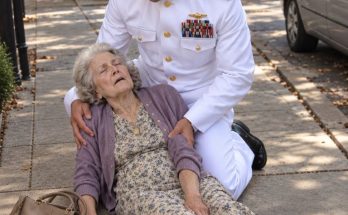
At 12:12 a.m., my mother-in-law slipped into my bedroom and put something inside my carry-on.
October 19.10.2026 by Old Story


Part 1:
My mother-in-law opened my bedroom door at 12 minutes past midnight.
I knew it was Christa by her step. She walks on the outside edges of her feet when she thinks the house is asleep. I had told her at dinner that I had an early flight and was going to bed.
I watched her shadow cross the wall.
The zipper on my carry-on is loud. She knew that, too, because she took it one tooth at a time. Something small and heavy went into the inner pocket.
Then, from the doorway, with her phone against her cheek, she whispered, “It’s in her carry-on. Tip off airport security at 6:00.”
I kept pretending to sleep. I kept my breathing slow and my eyes shut, and I counted her steps back down the hall, 11 of them, and the soft click of her own door.
Then I lay there in the dark and thought the only clear thought I had left.
Whoever was on the other end of that phone knew my name.
Welcome back to Calm Drama Stories. This channel tells first person family stories about the people who were supposed to be safe, the moment they weren’t, and what it takes to stand back up with your name still your own.
Settle in, listen closely, and tell us where you would have drawn the line. Drop a comment and be sure to subscribe.
At 4:40 in the morning, I carried my suitcase down Christa’s stairs in my socks.
But I should tell you about the four hours before that, because those four hours are the only reason I’m the one telling this story.
The story is still unfolding. Please type “YES” in the comments, and I’ll post the rest.
Part 2:
For the first 20 minutes, I didn’t move.
I listened to the house. The water heater ticked in the basement. Dot, my husband’s grandmother, coughed twice at the end of the hall the way she had coughed at every holiday for 11 years and then went quiet.
Somewhere below me, my husband Reed was asleep on the basement sofa because he had thrown his back out carrying folding tables for Dot’s 80th birthday party.
And Christa had said in the kitchen, with her hand on my arm, “Take the guest room, sweetheart. You need sleep before that flight.”
I had thanked her. I had meant it.
When I was sure nobody was moving, I turned my phone face down so the light wouldn’t show under the door, and I got up.
I didn’t turn on a lamp. I took a tissue from the box on the nightstand and used the corner of it to pull the inner zipper of the carry-on open. And I held my phone light low inside the pocket.
It was a handgun, black, small, the kind that fits in a coat pocket. It was lying on top of my folded conference blazer like it belonged there.
I did not touch it.
I want to be clear about that because everything that happened afterward depended on that one decision.
I knew what fingerprints were. I knew what it would look like if the only hands on that gun were mine.
I took six photographs with the time showing on the screen. 12:31, 12:31, 12:32, and I sent them to my own email and to the cloud account I use for work because a registar learns early that a record only counts if it exists in two places.
Then I went through the rest of the bag because I had started to understand that a woman who hides a gun does not stop at a gun.
In the lining behind the mesh pocket where I keep chargers, there was a small fold of white tissue paper.
Inside it was a bronze brooch about 2 in long, the kind Roman soldiers used to pin a cloak.
I knew it the way you know your own handwriting.
It belonged to the Beaver Valley Historical Museum, where I had been the registar for 11 years. It lived in drawer 14 of the study collection in the annex.
There was a patch of white base paint on the back where an accession number should have been, and the number had been scraped off with something sharp.
I sat down on the edge of the bed with the brooch in its tissue in my lap, and I understood the whole shape of it at once.
The gun would get me arrested at the airport. The search that followed would turn up a museum object with its number scratched away in my luggage, and I would stop being a registar who had just found three discrepancies in her inventory and become a thief who had been caught trying to run.
I thought about screaming. I thought about going downstairs and shaking Reed awake. I thought about calling 911 from that bed with the gun 18 in from my knee.
And I made myself think about what each of those things would actually look like at 12:40 in the morning in Christa’s house.
A guest with a stolen gun in her suitcase, a homeowner in her robe saying she had no idea. A son who would go and ask his mother, and a mother who would come upstairs, and a gun that would be gone by the time anyone with a badge arrived.
Reed’s cousin used to say that Christa could make a priest apologize for the weather.
I believed it.
And the phone call. Somebody was going to tip off airport security at 6.
If I pulled the gun out and left it on Christa’s kitchen table and drove to the airport like nothing had happened, the call would still go out.
They would still pull me aside. They would still open every pocket, and they would find the brooch because I hadn’t known about the brooch until I went looking.
So, I didn’t move the gun.
I zipped the pocket closed the same way she had, one tooth at a time, with the tissue between my fingers and the pull.
I did go down to the basement. I stood at the top of those stairs for two full minutes listening to my husband breathe.
And I wanted to wake him so badly that my hands were shaking, but I knew him.
He would sit up and say, “Mom, that doesn’t make sense.”
And he would go find her because he is a good son.
And that was the problem.
I decided he would get the truth from me when I could put a piece of paper in his hand instead of a story.
I went back upstairs. I lay on top of the covers in my clothes and waited.
And because I had nothing else to do, I remembered.
I remembered Thanksgiving the year before, standing at Christa’s counter while she showed me how to pinch perogi closed so they wouldn’t open in the water.
My own mother died when I was 19, and I had never learned the small kitchen things from anyone.
And Christa knew that.
She had been patient. She had laughed when I measured the filling with a tablespoon.
I had told her about work that night, the way you tell a mother, the audit coming up for our reacredititation, the way I write every single number twice because I don’t trust myself or anyone else.
She had smiled and said, “Like a true bookkeeper.”
I remembered Dot at the table with her tin of butter cookies that hadn’t held cookies in 30 years, full of every birthday card anyone had ever sent her, telling Reed for the hundth time how his grandfather bought her a brooch in Rome in 1968.
I remembered thinking that first year that I had been given a second family without having to earn it.
At 4:40, I picked up my carry-on by the top handle so the wheels wouldn’t sound on the floor.
I left the spare key to Christa’s house on the kitchen counter next to the coffee maker she had set up for me with the little note that said, “Safe travels.”
I didn’t leave a note of my own. I didn’t know yet what I would have written.
I backed out of her driveway with my headlights off until I reached the street.
The airport is 15 minutes from Christa’s house.
I didn’t go there.
At 5:05 in the morning, I walked into the Moon Township Police Station with a suitcase I had not finished unzipping.
The lobby was empty except for a sergeant behind glass with a cup of coffee and a name tag that said Okafor.
I set the bag on the floor, not the counter.
And before he could ask what I needed, I said, “I believe a firearm was placed in my bag without my knowledge. I haven’t touched it. I’d like someone else to take it out.”
He looked at me for a second longer than I was comfortable with, and then he put the coffee down.
He asked me to step back from the bag. He asked whether anyone else was in the building with me.
He came around through a side door with another officer, a younger woman with gloves already on, and she unzipped the inner pocket while he watched my hands.
She lifted the gun out with two fingers and set it in a plastic tray, and the sound it made was so small for something that heavy.
They ran the serial number while I sat on a plastic chair.
It took about 9 minutes.
When Okaphor came back, something in his face had moved one notch. Not toward me and not away, just more careful.
“That weapon was reported stolen 2 months ago,” he said. “Out of a vehicle in West Morland County.”
“I’ve never been to West Morland County,” I said, which was true and useless.
He took my statement.
I told him everything from the door opening to the socks on the stairs. I showed him the six photographs with the times on them.
The young officer went through the rest of the bag and found the tissue paper, and Okafur unfolded it and looked at the brooch for a long moment.
“And this?”
“That belongs to the museum where I work,” I said. “I’m the registar. The number’s been scraped off the back. I think it was put there so that when I was searched at the airport, I’d look like I was stealing from my own collection.”
He wrote on a property receipt.
Line three said, “One brooch, bronze, approximately 2 in, accession number partially removed.”
He turned the form around so I could read it.
“You understand how this reads,” he said. “A stolen gun and a museum object in your bag. On your word that someone else put them there.”
“I understand,” I said. “That’s why I’m here instead of at a checkpoint.”
At 7:40, my flight to Chicago left without me.
I watched the minute pass on the clock above the glass.
I had a registar’s conference to speak at on Monday. I had a hotel room that would charge me anyway.
I thought about those things because they were small enough to hold.
At a quarter 8, Okaphor came back out and sat down in the chair next to mine, which he had not done before.
“I made a call to Alageney County Police,” he said. “They cover the airport. At 6:02 this morning, their line took an anonymous tip, a woman’s voice, prepaid number. She said a woman named Harleen would be on the 740 to Chicago with a handgun in her carry-on.”
I didn’t say anything.
I was listening to the words, a woman’s voice.
“That call makes me believe you,” he said. “It doesn’t let me arrest anybody. I’ve got a gun that was in your bag, and I’ve got a tip that knew your name and your flight, and I’ve got your statement that your mother-in-law whispered to someone in a doorway. Nobody saw her. Nothing’s got her hands on it.”
He paused.
“I’m going to keep looking, but I’m telling you what today is.”
I nodded.
He gave me the property receipt and a case number, and I folded them into my wallet, and I asked him the question I already knew the answer to.
“Is the museum going to be notified about the brooch?”
“It already was,” he said. “About 20 minutes ago.”
I called Reed from the parking lot of the police station with my suitcase in the trunk and a property receipt in my lap.
He answered on the fourth ring, and before I could say anything, he said, “Mom said you left.”
Not, “Are you okay?”
Not, “Where are you?”
Mom said you left.
“I’m at the Moon Township Police Station,” I said. “I’ve been here since 5.”
There was a silence on the line that I could hear him standing in.
Behind him, I heard a cabinet close. Christa’s cabinet. The one that sticks.
“Mom said you came down at dawn and took off without saying goodbye,” he said. “She said you’ve been off for weeks. She said somebody at the museum is saying things about you.”
“Reed, at midnight, your mother came into the room I was sleeping in and put a gun in my suitcase and a brooch from the museum. And she called someone and told them to tip off airport security at 6:00. I heard her. I’m looking at the police receipt for the gun right now.”
“That doesn’t make sense,” he said.
And I closed my eyes because I had known he would say exactly that in exactly that voice.
“I know it doesn’t.”
“Mom’s right here.”
“I know she is.”
“Let me call you back,” he said.
And I let him go because the alternative was listening to him walk into the kitchen and ask her.
At a quarter 9, my phone rang again, and it was Mr. Abernathy, the museum director.
He had been in the job seven months. He was a careful man who wore a tie on Saturdays, and he had told me in my first week under him that my records were the cleanest he’d seen in a county museum.
I liked him.
His voice that morning was the voice you use with someone you have just been told something about.
“Harleen,” he said, “I’ve had two calls this morning, and I need to tell you about both.”
The first was from the police. They have an object in evidence that appears to be ours.
The second was an email. It came in at 6:30 from an address I don’t recognize, and it says that you have been removing items from the study collection and selling them, and that I should look at the inventory discrepancies you reported last month in that light.
I sat very still in the driver’s seat.
6:30, the tip at 6, the email at 6:30.
Two things half an hour apart by at least two people working from a list.
“Mr. Abernathy,” I said, “I am the one who found those discrepancies. I reported them to you. I was going to walk you through them Monday.”
“I know you did,” he said. “And I am aware of how that could look from either direction, which is the problem.”
He breathed out.
“I have to place you on administrative leave with pay pending the police matter and our own review. Effective now. Your badge and your network access have been turned off. I’d ask you not to contact staff about collections matters until this is resolved.”
Staff 11 years and a word had made me a visitor.
“The brooch,” I said, “it’s from drawer 14, accession number 74.12.09. It was there on March 3rd. I have the spot check photo.”
“Then I’d ask you to hold on to that,” he said.
And I understood that he was telling me as gently as his position allowed that the photo was for later and that later was not now.
I drove home to Beaver. It’s 35 minutes from Christa’s house, and I don’t remember a single mile of it.
Our house is a small brick one on a street of small brick ones, and the second bedroom has been my office since the year we moved in.
Along the back wall, there are three bankers boxes and a blue binder.
And that afternoon, I got down on the floor and took the lids off all three because if I was going to be accused of keeping records, I was going to find out what my records knew.
I should explain what was in those boxes because Christa understood it only halfway, and the half she didn’t understand is the reason I’m still employed.
A registar keeps the museum’s memory.
Every object has an accession number, a location, a condition report, and a history of who touched it and when.
The official versions of all of that live on the museum’s server.
But from my first year, I had kept my own parallel set at home.
Every month, I did a spot check of the study collection drawer by drawer and photographed what I saw with the date showing.
Every month, for the insurance file, I photographed the sign-in sheet for the annex, the paper log where anyone who went into the back storage wrote their name and the time.
I did it because nobody else did and because I had learned at 19, going through my mother’s papers after the funeral, what it costs when nobody wrote anything down.
So I laid it out on the carpet.
The three discrepancies I had found in April.
The brooch from drawer 14, a small bronze oil lamp from drawer 9 with a hairline crack in the handle shaped like a letter V that I had noted in its condition report.
A set of 11 coins from a tray in drawer 22.
All three had been donated in the 1970s by Walter Linfist, Dot’s late husband, a trustee of the museum for 20 years, a man who had bought small antiquities in Europe when he was young and given them to the county when he was old.
Then I laid my sign-in photos next to them.