My father invited me to the gala honoring my late mother. Then he watched his wife order security to throw me out. I thought the humiliation was the worst part—until my lawyer emailed me a ten-year contract benefiting my stepmother’s company. The cover memo said I supported it. I had never seen it. Before midnight, they were knocking on my apartment door, asking me to undo the one decision I’d actually made.
PART 1 — THE DAUGHTER AT THE DOOR
My stepmother ordered security to throw me out of the hotel my mother built.
My father stood six feet away, holding a glass of champagne.
He didn’t put it down.
That was the detail I would remember later. Not Celeste’s voice or the guests pretending not to watch. Just my father’s fingers around the stem of that glass while two security guards waited for him to say something.
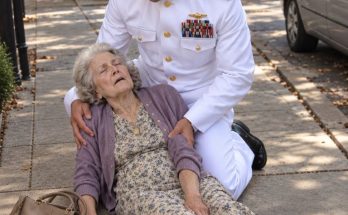
I had arrived at the Halston Meridian Hotel in Boston twenty minutes earlier, wearing my Army dress uniform and my mother’s pearl earrings.
My name is Mara Halston. I had turned twenty-eight three weeks before, while finishing an overseas assignment.
Dad had called the day I returned.
“Come Friday,” he said. “The scholarship gala won’t feel right without you.”
For years, the hotel had hosted the annual fundraiser for the Evelyn Halston Hospitality Scholarship Fund. My mother had started it to help hotel employees and their children attend college or trade school.
She used to say a beautiful building meant very little if the people working inside it couldn’t build lives of their own.
She had been gone nine years.
At the entrance, a banquet captain named Luis recognized me.
“Miss Mara.”
He smiled, then seemed to remember that I was no longer the teenager who used to sneak warm rolls from his service station.
“Welcome home.”
I nearly hugged him.
Instead, I thanked him and stepped into the lobby.
The antique clock was still above the marble desk. The brass elevator doors still reflected the chandeliers.
But my mother’s photograph was missing from its place beside the ballroom entrance.
I found it near the coatroom.
A vase of tall branches partly covered her face.
I moved the vase a few inches.
Then I went inside.
Dad saw me first. His expression softened, and he took a step toward me.
Celeste followed his gaze.
Her smile vanished.
“What is she doing here?”
Several guests turned.
I stopped beside the seating display.
“Dad invited me.”
Celeste wore a silver gown and the diamond bracelet my father had given her for their fifth anniversary. She had overseen the gala for the last four years.
She looked at my uniform.
“This is not the place for a scene.”
“I haven’t made one.”
Her mouth tightened.
She turned toward security.
“Remove her.”
One guard glanced at the tablet in his hand.
“Mrs. Halston, she is on the guest list.”
“I’m aware of the guest list.”
Then everyone looked at Dad.
So did I.
When I was little, he used to lift me onto his shoulders in this lobby. From up there, I could almost touch the lowest crystal on the chandelier.
Now he looked at the floor.
“Mara,” he said, “let’s talk tomorrow.”
I waited for the rest.
There wasn’t any.
“You asked me to come.”
“I know.”
Celeste folded her hands.
“Please don’t make this more uncomfortable.”
I looked at my father one last time.
“Did you want me here, or did you just hope I wouldn’t come?”
He opened his mouth.
I left before he found an answer.
In the lobby, Luis stood beside a service cart, staring at the ballroom doors.
“I’m sorry,” he said.
I touched his arm.
“You didn’t do anything.”
Outside, the cold reached through my jacket. I walked half a block before calling Elliot Price, the attorney who had helped me understand the arrangements my mother left behind.
He answered with surprise.
“Mara? Aren’t you at the gala?”
“I was.”
I told him what happened.
Then I said:
“Stop preparing the extension for Dad. I want to review everything before I agree to anything.”
Elliot was quiet.
“What?” I asked.
“Richard told the company’s counsel you had already agreed.”
A taxi rolled past me, tires whispering against wet pavement.
“Agreed to what?”
“Continuing his authority. And supporting the west-wing proposal.”
I stood beneath a streetlight.
“Elliot, I haven’t seen a west-wing proposal.”

PART 2 — WHAT THEY SAID I HAD APPROVED
My mother had bought the Meridian when it was a tired hotel with leaking windows and a restaurant that closed before dinner.
Dad used to joke that she saw potential where everyone else saw invoices.
For seven years, she worked to restore it.
She knew which rooms were cold in February. She knew which dishwasher was saving for nursing school. She knew the housekeeper whose son needed an afternoon shift covered so she could attend his graduation.
Dad helped with financing and business relationships.
Together, they made it successful.
But the hotel company had begun with her money and her work. Before she died, she placed her controlling interest in a trust for me.
Under those documents, I would receive control of the voting interest at twenty-eight.
The transition had been prepared months before my birthday. I had reviewed and signed the necessary papers with Elliot while arranging my return.
Dad’s existing management agreement continued for a short transition period.
I had expected to extend it.
I was an Army officer, not a hotel manager. Dad knew the business, and I wanted to believe he would keep doing what was best for it.
That night, Elliot sent me the meeting materials.
The company’s controlling interest had recently been valued at approximately twenty-four million dollars. That included its interest in the hotel property and business.
It wasn’t twenty-four million dollars waiting in a bank account.
It was a building, a working business, obligations, employees, and decisions.
One decision was waiting for approval the following week.
Exclusive Event Operations Agreement.
I opened the document.
Celeste’s company, Meridian Signature Events, would receive exclusive rights to operate the ballroom and west-wing event spaces for ten years.
I knew she had an event-planning business. She had used outside clients to build it while coordinating some hotel functions.
I did not know she intended to take control of the Meridian’s most profitable event spaces.
The cover memo included a sentence I read three times.
Richard Halston has confirmed that Mara Halston supports the proposal and intends to continue his authority to represent the controlling interest.
“I never said that,” I told Elliot.
“Then we correct it tonight.”
He asked me to put my position in writing.
I did.
He sent it to the company’s counsel and the board, making clear that no one should rely on the claimed approval.
The contract wasn’t signed.
The hotel didn’t suddenly change owners.
But the plan could no longer move forward on the assumption that my answer was yes.
My phone began ringing before I finished changing out of my uniform.
Dad.
Celeste.
Dad again.
I sent one message.
I will discuss the documents with counsel. Not tonight.
Just before midnight, someone knocked on my apartment door.
Then knocked harder.
“Mara.”
Celeste.
I looked through the peephole.
Dad stood behind her, still in his tuxedo.
I kept the door closed.
“You need to leave.”
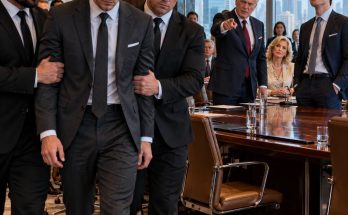
“You’ve caused a board crisis,” Celeste said.
“I corrected something that wasn’t true.”
“You told your father he could keep managing the hotel.”
“I said I was willing to discuss an extension.”
Dad stepped closer.
“Mara, I thought—”
“Did you tell them I supported the contract?”
He looked toward Celeste.
Then back at the door.
“I expected that you would.”
For a moment, I couldn’t speak.
My mother’s earrings sat on the kitchen counter behind me. I had worn them because I wanted to feel close to her.
Now I wanted to ask her how to stop wanting my father to be someone he wasn’t choosing to be.
Celeste tried again.
“You were going to let him handle this.”
“Handle the hotel,” I said, “or answer for me?”
Dad lowered his voice.
“Please open the door.”
I rested my hand against the frame.
“You had a chance to speak to me in the ballroom.”
He said nothing.
“Elliot will arrange a meeting.”
I stepped away from the door.
For several minutes, I heard their voices in the hallway.
Then the elevator arrived.
This time, I let it take them.

PART 3 — THE PEOPLE INSIDE THE LEGACY
The next morning, I met Elliot and the Meridian’s general manager in a small conference room at the hotel.
Her name was Helen Brooks.
She had started as the front-office manager when my mother bought the building. At sixteen, I had once complained to her that Mom spent more time at the hotel than at home.
Helen had handed me a stack of guest surveys.
“Then help her finish,” she’d said.
I remembered sitting beside my mother that evening, reading complaints about pillows while she ate cold takeout.
Now Helen stood when I entered.
“I should have come out to the lobby last night.”
“You were running an event.”
“I still should have come.”
I appreciated that she didn’t tell me not to take it personally.
I sat down.
“Before we discuss anything else, is everyone getting paid?”
Helen glanced at Elliot.
“Yes.”
“And the bookings?”
“Still being honored.”
Elliot explained that correcting the record about my approval had not stopped ordinary operations.
I nodded.
“Good. I don’t want anyone wondering whether they can pay rent because my family had a fight.”
Helen opened her folder.
Inside were projections, draft terms, and a list of questions she had already sent to my father.
The ballroom and west wing brought in a substantial part of the hotel’s event revenue.
Under Celeste’s proposal, her company would control bookings for those spaces and keep several categories of event fees.
The hotel would still bear significant staffing, utilities, and maintenance costs.
There were guarantees and exceptions buried in the draft. Some seemed reasonable. Others favored her company in ways I couldn’t explain.
I asked questions.
Helen answered some.
For others, she said:
“We need an independent assessment.”
That was the answer I trusted most.
“Did Dad see these concerns?”
She slid an email across the table.
She had asked him for a meeting with me.
His reply read:
Mara is occupied with her return to duty. I am handling the family’s position. Please route questions through me.
The message was dated twelve days before the gala.
I remembered his call that week.
He had asked whether my flight was confirmed.
He had asked whether I still had my apartment.
He had not mentioned a contract.
There was another email, sent four days later.
Helen had repeated that the arrangement needed careful review because Celeste controlled the proposed contractor.
Dad replied:
We have discussed this within the family.
I looked up.
“We hadn’t.”
Helen folded her hands.
“I understand that now.”
Until then, part of me had wanted to believe the ballroom was a single terrible moment.
Celeste angry.
Dad startled.
Everyone behaving badly under bright lights.
But these emails had been written in quiet offices, days apart.
There had been time to call me.
Time to tell the truth.
Time to decide differently.
At lunch, Helen took me through the west wing.
A banquet crew was resetting a room after a breakfast conference. One employee knelt beside a table, adjusting a leg that wouldn’t sit evenly.
Luis was counting linens.
He smiled when he saw me, though cautiously.
“Back already?”
“Apparently I have some reading to do.”
He laughed.
Near the service entrance, a photograph hung above the employee bulletin board.
My mother stood in the unfinished ballroom wearing jeans, work boots, and a paper crown.
I had forgotten that picture.
The staff had made the crown on her fortieth birthday.
She had worn it all afternoon.
“She looks happier there than in the official portrait,” I said.
Helen smiled.
“She was. The official one took three hours.”
We stood looking at it.
Then Helen pointed to a woman beside my mother.
“That’s Denise. Her son was one of the first scholarship recipients. He runs a commercial kitchen now.”
I thought about the gala.
The donors.
The polished speeches about legacy.
Here was one piece of that legacy, standing in an old photograph beside a woman in a paper crown.
Back in the conference room, I asked for an independent review of the proposal and the management structure.
I also asked that the records be preserved and that future materials come directly to me.
That evening, Dad sent a message.
Please don’t let one bad moment erase everything I’ve done.
I looked at Helen’s emails spread across the table.
Then I replied.
It wasn’t one moment. You had twelve days to ask me.

PART 4 — THE QUESTION MY FATHER COULDN’T AVOID
The meeting took place the following week.
Celeste arrived carrying a leather portfolio. Dad sat beside her, looking tired.
Helen attended with the financial records. Elliot sat next to me. The company’s counsel and the other directors had the same documents we did.
Nobody raised a glass.
Celeste began with the work she had done.
She had brought new clients to the hotel. She had organized events when Dad was grieving. She had dealt with vendors, difficult guests, and last-minute cancellations.
Some of it was true.
I said so.
“I’m not saying you never contributed.”
She looked relieved, then impatient.
“Then perhaps we can stop treating this like something sinister.”
“We can examine it,” I said.
The independent assessment had identified material problems with the proposed terms. It recommended competitive proposals, clearer cost allocation, and stronger protections for the hotel.
It did not say Celeste could never provide services.
It said this agreement should not be approved as written.
She pushed the report away.
“People who haven’t done the work always think they know what it should cost.”
Helen spoke.
“That’s why I asked for a review before it went this far.”
Celeste turned toward her.
“You could have discussed your concerns with me.”
“I did.”
Helen gave the dates.
The company’s counsel brought the discussion back to the claimed approval.
Dad shifted in his chair.
“I misunderstood where Mara stood.”
I looked at him.
“What did I say that you misunderstood?”
He rubbed one thumb against the other.
“You said you trusted me to keep things running.”
“I did.”
“And I believed that included—”
“A ten-year agreement with your wife’s company?”
He stopped.
Celeste leaned forward.
“You’ve been gone, Mara. Some of us stayed.”
The words landed exactly where she intended.
I had missed birthdays.
Holidays.
The anniversary of Mom’s death.
But being away did not mean I had agreed to whatever they decided in my absence.
“Then send me the information,” I said. “Don’t send other people my answer.”
She looked at my father.
He kept his eyes on the table.
“Richard.”
I knew that tone.
I had heard it before canceled visits and shortened phone calls. Before Dad explained that it would be easier if we had lunch another time.
This time, I spoke first.
“Dad, I need you to answer something.”
He looked up.
“If I didn’t control the vote, would you still think what happened to me was wrong?”
His face changed.
“Of course.”
“Then why didn’t you say so when it mattered?”
He took a breath.
“I didn’t want a confrontation.”
“There was already a confrontation. I was the one standing in it.”
No one moved.
Dad looked toward Celeste, then back at me.
“I thought you would let it go.”
I nodded slowly.
There was the answer.
He had counted on my willingness to absorb the hurt.
“I usually did,” I said.
His eyes filled.
“I know.”
Celeste closed her portfolio.
“This has become a family therapy session.”
Elliot spoke calmly.
“The approval was represented as a family position. We needed to establish whether that representation was accurate.”
It wasn’t.
By the end of the meeting, the proposal had been rejected in its current form. Any future arrangement would require proper disclosure and independent evaluation.
I would not extend Dad’s management agreement.
The board began a documented transition, retaining Helen to oversee daily operations with appropriate financial support and oversight.
Celeste’s event role would be reviewed and wound down according to its existing terms. She would not speak for ownership or negotiate on the hotel’s behalf.
There were documents to prepare, duties to transfer, and practical questions still to answer.
Nobody lost a mansion before lunch.
But the arrangement in which Dad spoke for me and Celeste decided whether I belonged was finished.
Afterward, Dad caught up with me near the elevators.
“I’m sorry.”
I looked at him.
“I need you to correct what you told them.”
“I will.”
“In writing. To everyone who received it.”
He swallowed.
“All right.”
The elevator opened.
He didn’t step inside with me.
“Can we have dinner sometime?”
I wanted to say yes immediately.
That frightened me a little—how quickly I still wanted to make him feel better.
“Not yet.”
He nodded.
“Okay.”
For once, he let my answer remain my answer.
PART 5 — A PLACE AT THE TABLE
The hotel kept opening its doors every morning.
That mattered more to me than the dramatic version people began telling about the gala.
I heard that I had fired everyone.
That I had sold the building.
That my father had lost twenty-four million dollars in a single night.
None of it was true.
The trust’s ownership arrangements had been in place for years. I had begun exercising responsibilities I could no longer safely leave to my father.
The transition took work.
Helen kept the staff informed. The board received regular reports. An outside adviser helped review major contracts and strengthen the process for approving arrangements involving family members.
There were expenses we hadn’t expected.
A kitchen repair.
A postponed event.
A long discussion about replacing the reservation system.
Running a hotel, I learned, involved very few triumphant speeches.
It involved asking questions and listening carefully to the people who knew the answers.
I returned to duty when my leave ended.
I attended scheduled meetings remotely when I could and reviewed materials in advance. I did not pretend my military experience made me an expert in room pricing or commercial kitchens.
Helen did not pretend I needed to become one overnight.
Celeste completed the handover of the events she was already contracted to coordinate. Her company did not receive the exclusive west-wing agreement.
We had no private reconciliation.
Eventually, our communications became brief and practical.
That was enough.
Dad sent the correction I had requested.
He acknowledged that I had not approved the proposal and that he should not have represented otherwise.
Later, he wrote to me separately.
He didn’t say Celeste had made him do it.
He didn’t say grief had left him no choice.
He wrote that he had known I wanted his affection and had trusted that desire to outlast whatever disappointment he caused.
I had to put the letter down halfway through.
It was the first apology that described what had actually happened.
I didn’t answer immediately.
Meanwhile, my mother’s photograph returned to the main lobby, this time as part of a small display about the hotel’s history.
Helen suggested including photographs of the original staff.
We added the one with the paper crown.
Luis supplied an old menu with prices that made the current chef laugh.
Denise brought a photograph of her son at graduation.
The scholarship fund continued its work separately, with clear reporting to donors about the money raised and the students supported.
At the next gala, I couldn’t attend.
I was working.
Helen sent me a photograph of the scholarship recipients standing beneath the lobby clock.
There was no empty place setting arranged to make my absence into a statement.
There was simply a note in my inbox:
We missed you. Here’s what you helped make possible.
Several months after the meeting, I agreed to breakfast with Dad.
One hour.
At the Meridian.
I arrived early and chose a table near the window, away from the ballroom.
I wore jeans and a sweater.
My mother’s pearls stayed at home.
Dad came in carrying nothing.
No portfolio.
No folder.
No gift.
He stopped beside the table.
“Morning, Mara.”
“Morning.”
He looked toward the lobby display.
“I saw the birthday picture.”
“Helen found it.”
He smiled faintly.
“Your mother kept that crown in her desk for years.”
I hadn’t known that.
For a moment, we shared the memory without trying to use it to settle anything.
A server approached with a coffee pot.
“Will someone be joining you?” she asked me.
Dad didn’t answer for me.
He stood beside the empty chair and waited.
I looked at the man who had once carried me through this lobby, and at the man who had watched me leave it alone.
Both were there.
Breakfast would not erase either one.
I moved my bag from the chair across from me.
“Yes,” I said. “My father.”
He sat down.
When he asked about my work, I began to tell him.
This time, he listened.