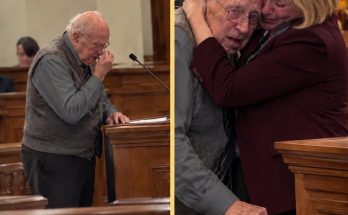
My Daughter-in-Law Stole My Entire $287,000 Retirement Fund and Laughed, “What Does an Old Woman Need Money For?” My Son Smiled Beside Her. I Made One Phone Call. Three Days Later, She Was Screaming, “What Have You Done?!”

At sixty-nine, I thought my birthday reunion would bring my family closer.
Instead, it exposed a betrayal that threatened everything my late husband and I had spent our lives building. But my daughter-in-law had overlooked one important detail about the woman she believed she could fool.
My name is Eleanor Whitmore. I am a widow, a mother, a grandmother, and someone who once believed that family loyalty could survive almost anything. I was wrong about that last part, although discovering the truth would eventually save me.
The reunion had been Vanessa’s idea. She insisted on celebrating my birthday at my lakeside home, a peaceful two-story house Richard and I had purchased thirty years earlier. Since his death five years ago, its rooms had felt unbearably quiet.
“Eleanor, you deserve a proper celebration. Let us take care of everything.”
My son Michael arrived carrying expensive champagne, while Vanessa brought an enormous cake decorated with pale pink roses. Their daughter Sophie, sixteen, handed me a homemade birthday card and kissed my cheek.
“Happy birthday, Grandma. I made the card myself.”
I hugged her tightly. Sophie was the one person in that household who still visited simply because she wanted to see me, and I treasured our afternoons baking cookies or walking beside the lake.
Michael raised his glass during dinner and praised my generosity. He spoke about how much I had sacrificed for him, how Richard would have been proud, and how fortunate he was to have such a devoted mother.
I believed every word.
Over the years, I had paid Michael’s mortgage twice, covered several semesters of Sophie’s private school tuition, and contributed substantial money toward his struggling consulting business. Whenever I hesitated, he reminded me that families supported one another.
That evening, Vanessa noticed me checking a notification on my phone. She leaned over my shoulder, studying the banking application before offering to help update its security settings.
“You’re always saying these apps confuse you. Give me five minutes, Eleanor.”
I hesitated, then handed her the phone. Although I had spent decades working with financial records, the newest mobile applications sometimes frustrated me, and Vanessa had helped with ordinary phone settings before.
Her fingers moved quickly. She asked me to confirm a couple of prompts, explaining that the bank had introduced additional protections. I was distracted by Sophie calling me into the kitchen to see the birthday cake.
When Vanessa returned my phone, she was smiling.
“All finished. Your account should be much easier to manage now.”
Something about her satisfaction unsettled me. Still, I dismissed the feeling because I wanted to enjoy an evening when my family finally seemed happy to be together.
The next morning, sunlight streamed across my kitchen table as I opened my banking application. I intended to transfer money into a separate savings account for property taxes.
The available balance read $43.17.
I refreshed the screen, convinced the application had malfunctioned. Then I signed out, signed back in, and checked the account history.
Yesterday, my balance had been $287,043.17.
Nearly every dollar was gone.
For several seconds, I couldn’t move. That money represented decades of careful saving, Richard’s final retirement distributions, and the financial independence I had promised myself after his death.
I called Michael immediately.
“Mom, we’re busy. What is it?”
“Michael, where is my money?”
There was a long silence, followed by muffled voices. Then Vanessa took the phone, sounding almost amused.
“Oh, Eleanor. You noticed already?”
My stomach tightened.
“What have you done?”
She laughed.
“Michael’s business needed investment. We decided the money would be more useful there.”
“You took my retirement savings without permission?”
“Please don’t be dramatic. You’re almost seventy. What do you need all that money for?”
I heard Michael speaking in the background. When I demanded to talk to him, he finally took the phone.
“Mom, stop making such a big deal. You’ll be fine.”
I stared at Richard’s photograph beside the window. My husband had spent forty years building a respected regional accounting firm, and I had worked alongside him for twenty-six of those years.
Before retiring, I oversaw its financial investigations division. My team examined suspicious transfers, reconstructed financial records, and helped clients understand how their money had disappeared.
Vanessa knew I was retired. Apparently, she had never bothered to learn what I had retired from.
“All right, Vanessa.”
She laughed again.
“See? I knew you’d understand.”
I ended the call and opened an old address book. Near the back, beside a handwritten Christmas greeting from years earlier, I found Thomas Bennett’s number.
Thomas had once worked closely with our investigations team before becoming an attorney specializing in financial disputes. Richard trusted his judgment, and I trusted his ability to remain calm when everyone else panicked.
He answered on the fourth ring.
“Eleanor Whitmore? This is a surprise.”
“Thomas, someone has stolen my retirement savings.”
His voice changed immediately.
“How much?”
“Two hundred and eighty-seven thousand dollars.”
He asked whether I was safe, whether I had contacted the bank, and whether anyone else had access to my accounts. I explained the reunion, Vanessa’s involvement with my phone, and the conversation that morning.
“Call the bank’s fraud department immediately,” he said. “Preserve every message and transaction record. I’ll help you find the right specialists.”
I followed his advice. The bank restricted further activity, opened an investigation, and issued new account credentials while reviewing the transfers.
By lunchtime, Thomas had arranged a meeting with a financial investigator named Rebecca Shaw. She had previously worked with a bank’s fraud-response team and understood the documentation required to challenge unauthorized transactions.
Rebecca listened carefully as I described the events. She asked detailed questions about my phone, account permissions, previous transfers to Michael, and whether I had knowingly authorized any investment.
“I authorized nothing,” I told her.
She nodded.
“Then we document everything and let the institutions trace what happened.”
The following afternoon, Rebecca returned with preliminary information supplied through the bank’s investigation. The money had not disappeared into a single ordinary purchase; it had moved through several transactions connected to a business account.
The receiving business was Whitmore Growth Partners, Michael’s consulting company.
I recognized the name immediately. I had helped him establish the business years earlier, although I had never agreed to finance it with my entire retirement fund.
Thomas warned me not to confront Michael again while the investigation continued. A formal dispute had been filed, and the bank was coordinating with the receiving institution to determine whether funds could be recovered.
I spent that evening examining old statements and emails. Richard had taught me that financial records told stories people sometimes preferred to conceal.
The first troubling discovery was an email Michael had sent three months earlier. He had requested another loan, claiming that a major client would soon pay an outstanding invoice.
I had declined.
Two weeks later, Vanessa began asking questions about my retirement accounts. She wanted to know whether my money was held in one bank, whether I had beneficiaries, and how I managed online transfers.
At the time, I thought she was expressing concern.
Now the conversations looked very different.
On the second day, Thomas called with another development. The bank had identified evidence suggesting that account-access changes occurred during the birthday reunion.
Rebecca was careful to explain that the timing alone did not establish who had performed each action. Investigators still needed records, authorization evidence, and statements from the people involved.
But the sequence matched my recollection.
Vanessa had borrowed my phone shortly before the account settings changed. Within hours, instructions had been submitted that ultimately moved the money toward Michael’s company.
I sat quietly while Rebecca explained the next steps.
Then I asked the question that frightened me most.
“Can they spend everything before anyone stops them?”
“We’re working to prevent further movement,” she replied. “But I can’t promise how much will be recovered.”
I appreciated her honesty. For the first time since discovering the theft, I understood that my experience could help me ask the right questions, but it could not guarantee a particular outcome.
That night, Sophie called.
“Grandma, are you okay?”
I hesitated. I didn’t want to involve a teenager in a dispute between adults, especially when her parents were responsible for so much of her daily life.
“I’m dealing with a financial problem, sweetheart. How are you?”
She was quiet for a moment.
“Mom and Dad have been arguing about money. I heard them say something about your bank.”
I closed my eyes.
“You don’t need to solve any of this, Sophie.”
“I know. I just wanted to make sure you’re okay.”
After we hung up, I sat beside Richard’s photograph. I remembered how carefully he had taught Michael to balance his first savings account, explaining that money represented work, choices, and responsibility.
I wondered when those lessons had stopped mattering.
On the third morning, I received a call from an unfamiliar number. Before I could introduce myself, Vanessa began shouting.
“ELEANOR! WHAT HAVE YOU DONE?”
I moved the phone away from my ear.
“Good morning, Vanessa.”
“Michael’s business accounts are restricted! The bank is asking questions! You’ve made us look like criminals!”
I remained seated at my kitchen table.
“I reported unauthorized transactions involving my retirement savings.”
“You were supposed to understand!”
“I understood perfectly.”
She began accusing me of destroying Michael’s career. Then she demanded that I withdraw the complaint immediately.
I told her I would communicate through the bank and my attorney.
“Do you realize what you’ve started?”
“Yes, Vanessa. I do.”
When the call ended, my hands trembled. I had spent three days waiting for confirmation that someone was taking the matter seriously, yet hearing her panic brought little satisfaction.
The woman who laughed when my retirement savings vanished was now begging me to stop the investigation.
Thomas arrived an hour later with Rebecca. They explained that the receiving bank had restricted certain transactions while reviewing the disputed funds, but those restrictions were not a final determination of wrongdoing.
Some money appeared to remain in the business accounts. Other amounts had already been used for operating expenses and payments that required further examination.
Rebecca placed a preliminary transaction summary on the table.
Several transfers were connected to Michael’s company, but one payment stood out because it did not resemble an ordinary business expense.
It was a substantial deposit toward a luxury waterfront property.
I stared at the entry.
Michael had told me he could barely afford his mortgage.
Why was his company paying toward another house?
Thomas contacted the appropriate investigators and requested that the transaction be reviewed. I provided copies of messages in which Michael had described his business as desperate for funds.
The following day, Michael appeared at my front door.
He looked exhausted, with dark circles beneath his eyes. For a moment, I saw the frightened little boy who used to run to me after falling off his bicycle.
“Mom, please. Can we talk?”
I stepped outside rather than inviting him in.
“Thomas will be here shortly. We can speak when he arrives.”
Michael rubbed his face.
“Vanessa says you reported us.”
“I reported what happened to my money.”
He looked toward the lake.
“I didn’t think it would go this far.”
“How far did you think stealing my retirement savings should go?”
He winced.
“Vanessa said we could replace it after the next investment came through.”
I waited.
“She said you had more than enough. She said the business would collapse if we didn’t act.”
“And what did you say?”
He stared at the ground.
“I agreed.”
The admission hurt more than I expected. For three days, part of me had hoped Michael had been deceived or had discovered the theft only afterward.
Instead, he had participated.
Thomas arrived before I could respond. We moved into the dining room, where Michael repeated his account while Thomas took notes and explained that any formal statement should be handled appropriately.
Michael admitted that he knew Vanessa intended to access my funds. He claimed he believed the money would be returned quickly, although he acknowledged I had never authorized the transfer.
Then Thomas asked about the waterfront property.
Michael’s expression changed.
“That’s complicated.”
“Explain it,” I said.
He admitted that Vanessa had been negotiating to purchase an expensive vacation property. She believed a successful investment would allow them to complete the purchase and present it as proof of their financial success.
The deposit had been made using money connected to the disputed transfers.
I looked at my son, struggling to reconcile his words with the birthday toast he had delivered only days earlier.
“You told me I deserved to relax.”
He nodded miserably.
“Mom, I know.”
“You celebrated my birthday while planning to take the money I needed for the rest of my life.”
He covered his face.
“I don’t know how to fix this.”
For decades, those words had been my signal to step forward. Whenever Michael couldn’t fix something, I offered money, advice, or another chance.
This time, I remained seated.
“Then you’ll have to face the consequences and cooperate with the investigation.”
My son had mistaken a lifetime of generosity for permission to take whatever he wanted.

After Michael left, I walked through the house slowly. Richard’s books still lined the study, and the old grandfather clock still chimed every hour.
Nothing inside my home had changed, yet I felt as though the life I understood had been dismantled.
That evening, Vanessa sent a message claiming Michael had acted alone. She insisted that she had only helped organize my banking application and knew nothing about the transfers.
I forwarded the message to Thomas.
The next day, Michael sent a separate statement contradicting several of her claims. He acknowledged their discussions about the money and described how the proposed investment had developed.
Their marriage was beginning to fracture under the pressure.
I refused to become involved in deciding which of them deserved more blame. The evidence would have to establish responsibility, and both had choices to answer for.
Over the following weeks, the bank’s fraud team, receiving institutions, and investigators examined the disputed transactions. Thomas helped me respond to requests for documents and understand the difference between a provisional restriction and an actual recovery.
The process was frustratingly slow. Some days brought useful updates, while others passed without news.
I continued living carefully, using a separate account for ordinary expenses and postponing unnecessary purchases. I was fortunate to own my home, but the loss of my savings had created genuine uncertainty.
One afternoon, Rebecca called with encouraging news.
A substantial portion of the disputed funds remained identifiable in restricted accounts. Additional money associated with the property deposit might also be recoverable, depending on the outcome of the review.
I thanked her, then asked when the money would return.
“We still have legal and banking procedures to complete,” she explained.
I wrote the details in my notebook.
For the first time, I began planning my future without assuming that a successful investigation would solve everything immediately.
I met with an independent financial adviser and reviewed my household budget. We discussed emergency reserves, account protections, and the importance of separating family assistance from my own retirement security.
The adviser asked whether I intended to continue supporting Michael financially.
“No,” I answered.
The certainty surprised me.
I had spent years believing that saying no made me selfish. Now I understood that protecting my retirement was not a betrayal of my family.
It was a responsibility to myself.
A month after the reunion, Sophie visited with her aunt, who had brought her to my house. We baked lemon cookies and sat on the porch watching ducks move across the lake.
She seemed unusually quiet.
“Grandma, are you and Dad going to stop talking forever?”
I considered my answer carefully.
“I don’t know what our relationship will look like, sweetheart. But what happened wasn’t your responsibility.”
She nodded.
“Dad says he made a terrible mistake.”
“He made choices that hurt me very badly.”
“Can people change?”
“I believe they can. But change takes more than saying sorry.”
Sophie leaned against my shoulder. We stayed there until the sun slipped behind the trees, neither of us needing to say anything else.
Her visit reminded me that I could establish boundaries with Michael and Vanessa without turning every family relationship into another battleground.
Several weeks later, Thomas called to arrange a meeting about the financial investigation.
By then, the institutions involved had completed important stages of their reviews, and additional funds had been recovered through documented reversals and agreed repayments.
The full amount had not returned, and some losses remained disputed. Thomas explained the options for pursuing the outstanding balance, including formal claims against the responsible parties.
I listened, asked questions, and authorized the next steps.
The woman I had been before the reunion might have accepted a partial repayment and quietly abandoned the rest to avoid embarrassing Michael.
I was no longer that woman.
Recovering my money mattered, but reclaiming the right to make decisions about my own life mattered even more.
As the case progressed, Michael’s business lost several opportunities. His partners demanded explanations, and he eventually stepped away from managing its finances while the disputed transactions were examined.
Vanessa moved out of their home. Their marriage deteriorated further, although I never learned every detail of their disagreements.
I had stopped asking.
Thomas advised me to keep communications documented and avoid discussing the investigation through Sophie or other relatives. I followed his guidance, even when family members called urging me to forgive and forget.
One cousin told me that pursuing the matter would destroy Michael’s future.
I asked whether losing my retirement savings should destroy mine instead.
She had no answer.
Months passed before the remaining financial claims reached a resolution. Through a combination of recovered transfers, returned property-related funds, and a formal repayment agreement, I eventually recovered the full $287,000 principal.
There were legal expenses and months of uncertainty that no repayment could erase. But the money Richard and I had saved was back under my control.
I cried when the final confirmation arrived.
Not because I had won some magnificent victory, but because I could finally look at my retirement account without feeling frightened.
The separate legal proceedings concerning the unauthorized transfers continued. Michael and Vanessa were required to answer for their involvement, and I provided truthful information whenever investigators requested it.
I did not ask anyone to overlook the facts simply because Michael was my son.
I also refused to celebrate their difficulties. Watching someone you love face consequences is not the same as enjoying their suffering.
Six months after the reunion, Michael wrote me a letter.
He apologized for agreeing to take the money, for dismissing my fear, and for treating my savings as something he could borrow without asking.
He admitted that he had spent years expecting me to rescue him from every financial mistake.
“I convinced myself that because you always helped, you would never say no,” he wrote. “When you finally did, I decided your answer didn’t matter.”
I read the letter twice.
It was the first apology he had offered without blaming Vanessa or insisting that his intentions had been good.
I wrote back a week later.
I told him I loved him, but love did not erase what had happened. Any future relationship would require honesty, respect, and complete financial independence.
He replied that he understood.
For a while, we communicated only through occasional letters. He told me he was receiving counseling and working to rebuild his life without relying on my savings.
I wished him well, but I did not offer to finance his recovery.
The following spring, I invited him to meet me at a small café near the lake. Thomas knew about the meeting, although I wanted the conversation itself to remain between mother and son.
Michael arrived early, wearing an ordinary jacket instead of the expensive suits he once favored.
“Hi, Mom.”
“Hello, Michael.”
We ordered coffee and talked awkwardly about the weather. Eventually, he looked at me and asked whether I had been sleeping better.
“Yes,” I said. “Much better.”
He nodded.
“I’m glad.”
There was a long silence.
Then he spoke again.
“I don’t expect things to go back to normal.”
“Neither do I.”
“I want to earn your trust, if you’ll let me try.”
I looked through the window at people walking beside the water.
“Trust is built through choices, Michael. You’ll have to keep making better ones.”
He accepted that without arguing.
It was a small beginning, and I allowed it to remain small.
That summer, I joined a volunteer program helping older adults recognize financial scams and understand basic account protections. I worked with a local community center, giving presentations alongside banking professionals and consumer advocates.
During one session, a woman in her seventies raised her hand.
“What if the person taking advantage of you is your own child?”
The room grew quiet.
I thought carefully before answering.
“Then protecting yourself can feel especially difficult. But your relationship to someone doesn’t give them ownership of your money.”
Afterward, several attendees approached me privately. Some had experienced pressure to cosign loans, while others worried about relatives requesting access to their accounts.
I listened and encouraged them to seek appropriate professional guidance. Their stories reminded me that financial exploitation could happen behind perfectly ordinary family photographs.
My experience had left scars, but it had also given me a reason to use my knowledge again.
I began preparing short workshops about financial boundaries, suspicious account activity, and the importance of reviewing documents before granting anyone authority over personal assets.
The work gave structure to my weeks.
Richard would have enjoyed seeing the dining room covered with notebooks again. I could almost imagine him standing in the doorway, asking whether I intended to turn retirement into another full-time job.
I would have told him that I was finally doing something simply because I wanted to.
On the anniversary of the reunion, I decided to celebrate my birthday differently.
I invited Sophie, two close friends, Thomas, and Rebecca to a quiet dinner overlooking the lake. Michael attended for dessert after asking whether I would be comfortable with his presence.
Vanessa was not invited.
Sophie brought another handmade card. Inside, she had drawn a picture of the lake, the house, and the two of us sitting on the porch.
Underneath, she had written:
“Grandma, thank you for teaching me that being kind doesn’t mean letting people hurt you.”
I held the card for a long moment.
Michael noticed my expression.
“What did she write?”
I handed it to him.
He read the words silently, then returned the card with tears in his eyes.
“She learned something important from you.”
I looked at my granddaughter.
“So did I.”
After everyone left, I carried the dishes into the kitchen and placed Sophie’s card beside Richard’s photograph.
The house was quiet again, but the silence no longer felt like loneliness. It felt peaceful, filled with the familiar sounds of the grandfather clock and the gentle movement of water outside.
I opened my banking application and checked my account, not because I was afraid, but because I could.
The balance was exactly where it belonged.
I closed the application, made myself a cup of tea, and stepped onto the porch.
A year earlier, Vanessa had laughed when I discovered that my retirement savings were gone. Michael had stood beside her, believing I would eventually accept what they had done.
They had mistaken my silence for surrender.
They had mistaken my age for helplessness.
Most of all, they had mistaken my love for permission.
I had made one phone call, but the call itself had not performed a miracle. Recovering my money required evidence, professional help, patience, and the willingness to stand firm when my family wanted me to back down.
That was the lesson I wanted Sophie to remember.
Family should never have to prove its love by surrendering everything it owns.
I looked across the lake as the evening lights appeared along the opposite shore. Somewhere beyond those trees, Michael was rebuilding his life, and perhaps one day our relationship would become something healthy again.
I hoped so.
But I no longer needed that possibility to feel complete.
At sixty-nine, I still had my home, my savings, my independence, and the memories of a husband who had always believed in my strength.
And for the first time in years, I understood that the most important person I had finally learned to protect was myself.
THE END.